Author Archives: Jane Booth
The Simple Sweetness of Sugaring Season
A sweet heavenly fog permeates the sugarhouse. Scent memories conjure up cotton candy and caramel apples – but I am smelling something more earthy, spicy, an aromatic sweetness that makes me hungry – not for pancakes (as it must for others) but for roasted pork tenderloin and winter squash and butter and drizzles of caramelized maple syrup.
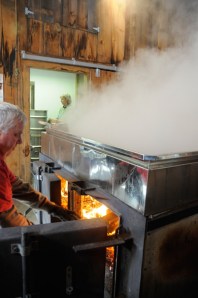
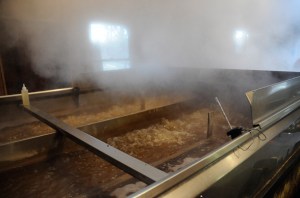
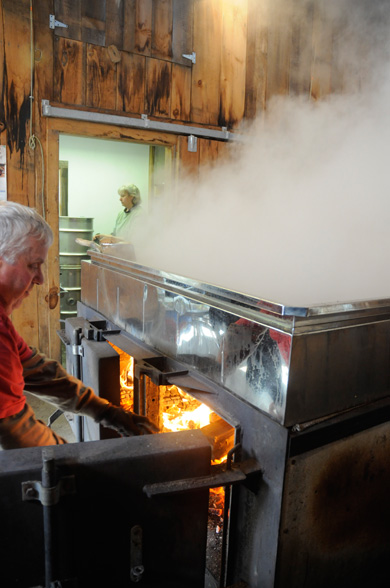
There is a roar and a blast of heat as Steve Glabach, a second generation sugar maker, opens the fire doors on the evaporator, a huge compartmentalized maple sugaring pan where just collected sap boils and bubbles. I’ve entered a scene from Macbeth – “double, double toil and trouble; fire burn and cauldron bubble.”

And toil doth the sugarmaker while the fire burns and the sap bubbles! Maple sugaring season is short and harried. Sap begins an annual dance in maple sugar trees, Acer saccharum (think sucrose), in late winter when days begin to warm while nights still turn to freezing. You can be assured that folks from hereabouts in northern New England will claim “it’s sugaring time!
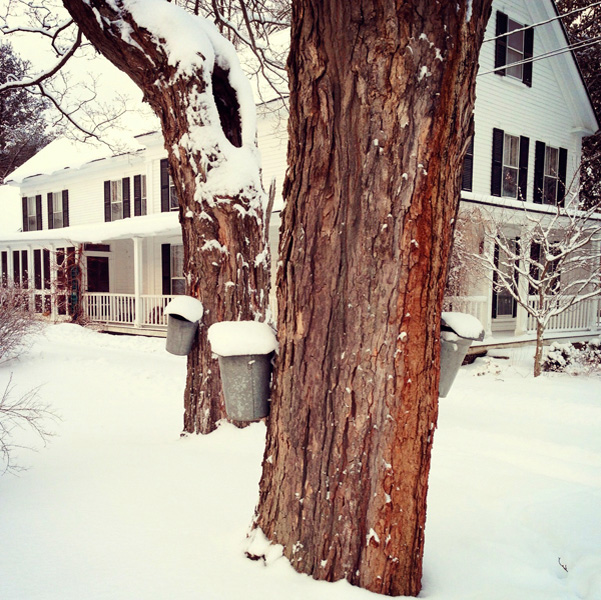
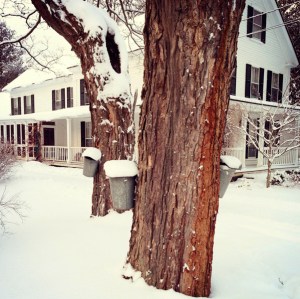
Stately maple trees lining back roads and town greens will suddenly sport buckets.
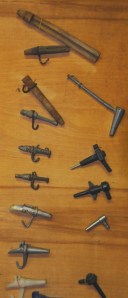
Groves of maple trees, called a sugarbush in maple sugaring terms, will be traditionally tapped with spiles (spouts) and buckets or with a modern system of tubing (pipeline) running from tree to tree and a vacuum pulling sap to a central collection point.
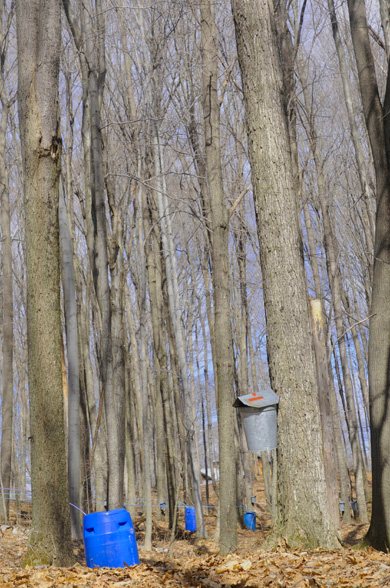
Steve Glabach and his wife, Maria, of Dummerston, Vermont use both systems and their children, Ted and Theresa, work alongside them during the short season as do other family members, friends, and volunteers.
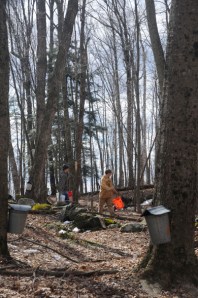
I spent part of a day following the frenzy and was exhausted watching a young volunteer crew rushing through the sugarbush gathering sap from buckets and sloshing off to fill a storage tank pulled by a tractor.
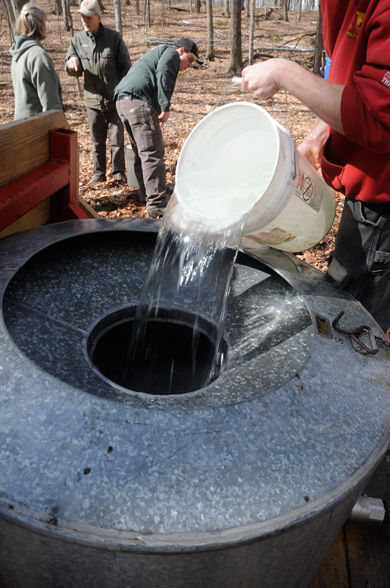
The tractor took off down the road and pulled behind the sugarhouse where a gravity fed line brought in all the watery goodness.
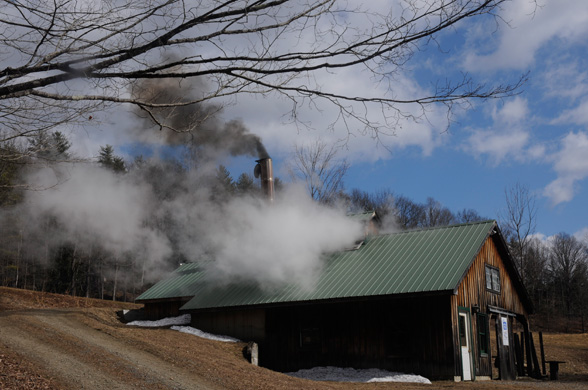
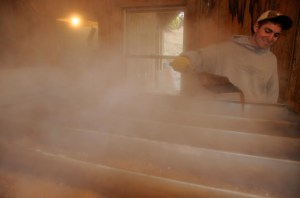
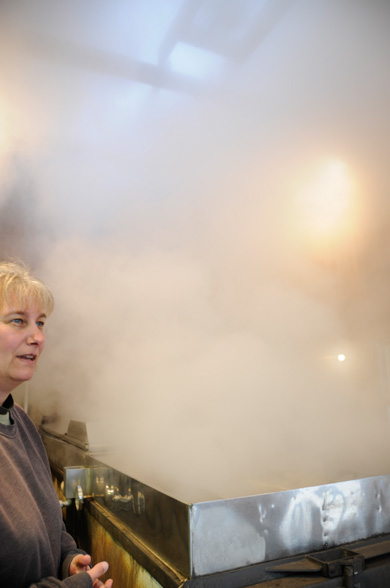
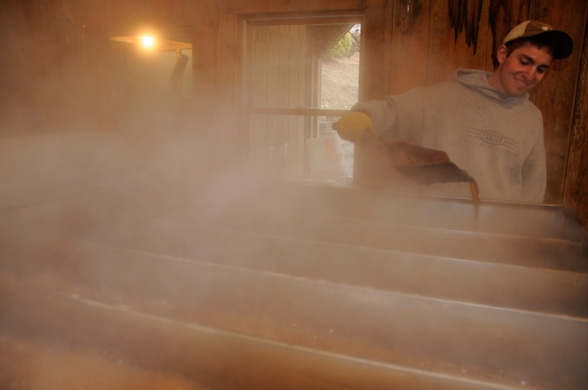
When maple sap is boiled down, water vapor forms and pours out of windows built into the top of the sugarhouse
The Glabachs, like many other sugar makers, use a reverse osmosis machine to assist in making maple syrup – it concentrates the sap for processing in a evaporator set over a heat source – an arch, or combustion chamber. The Glabachs use wood to fire their arch and it is the combination of wood smoke and steam escaping from the sap that smells so delicious.
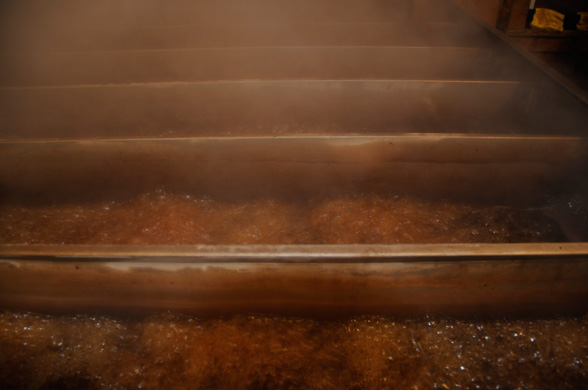
Days are long and nights are longer during this short sweet season. The fire must be stoked to continue the boil drawing water from the sap and as the sap turns to syrup a constant vigilance must be kept to keep the syrup from burning and to draw off the syrup as it finishes.
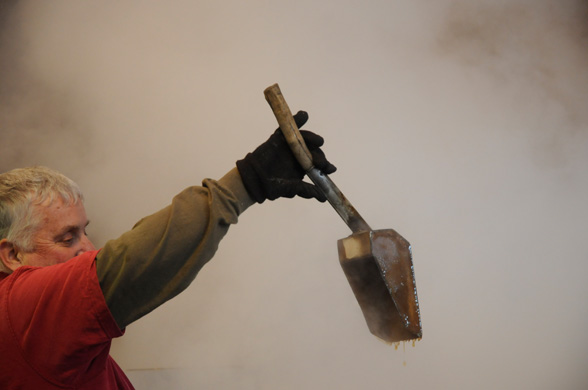
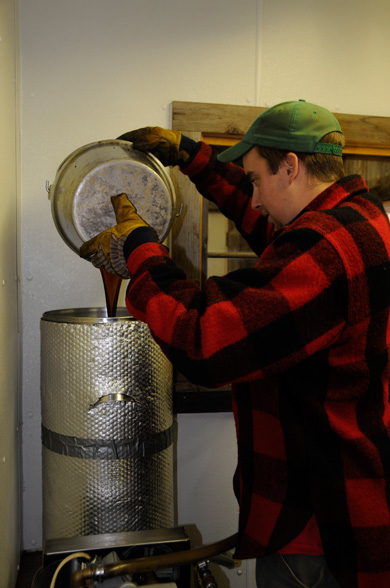
Ted Glabach pouring just drawn off syrup into one of many filtration systems used in the making of syrup – a compression system that will filter out the last large bits of minerals resulting in a sugar sand.
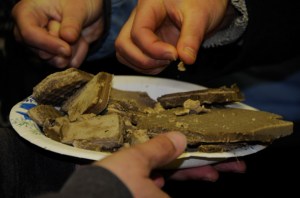
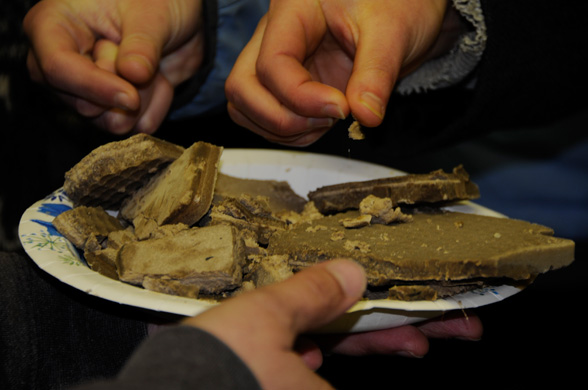
Sugar sand – it looked good enough to eat but we didn’t try it … the “sand” comes from a final filtration of the syrup and is filled with minerals
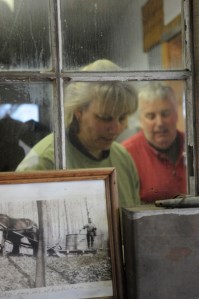
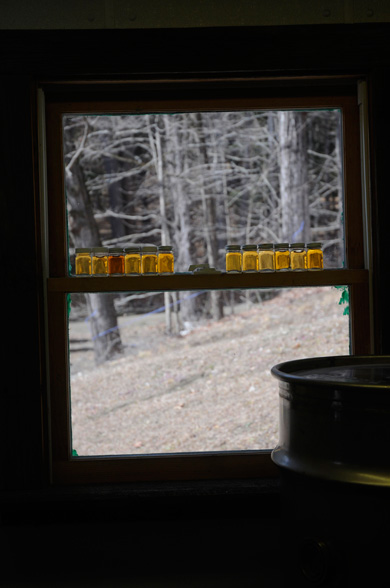
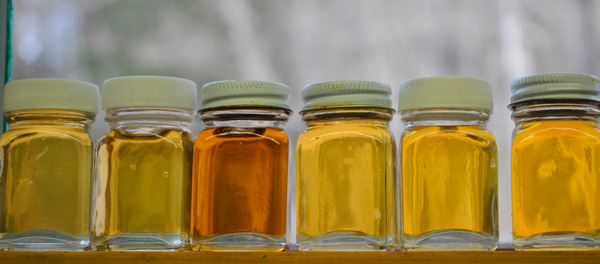
The Glabachs keep samples from each day they make syrup, note the different colors – light is Fancy, dark is Grade B
A few maple sugaring facts from The Proctor Maple Research Center of The University of Vermont and the Vermont Maple Sugar Makers Association
Vermont’s forests are filled with maple trees, approximately 1:4. The higher sugar content in the sap, the less sap needed to make syrup – the rule of thumb is 40 gallons of sap to make one gallon of syrup. Maple syrup is good for you: calcium, manganese, potassium, and magnesium and full of antioxidants too!
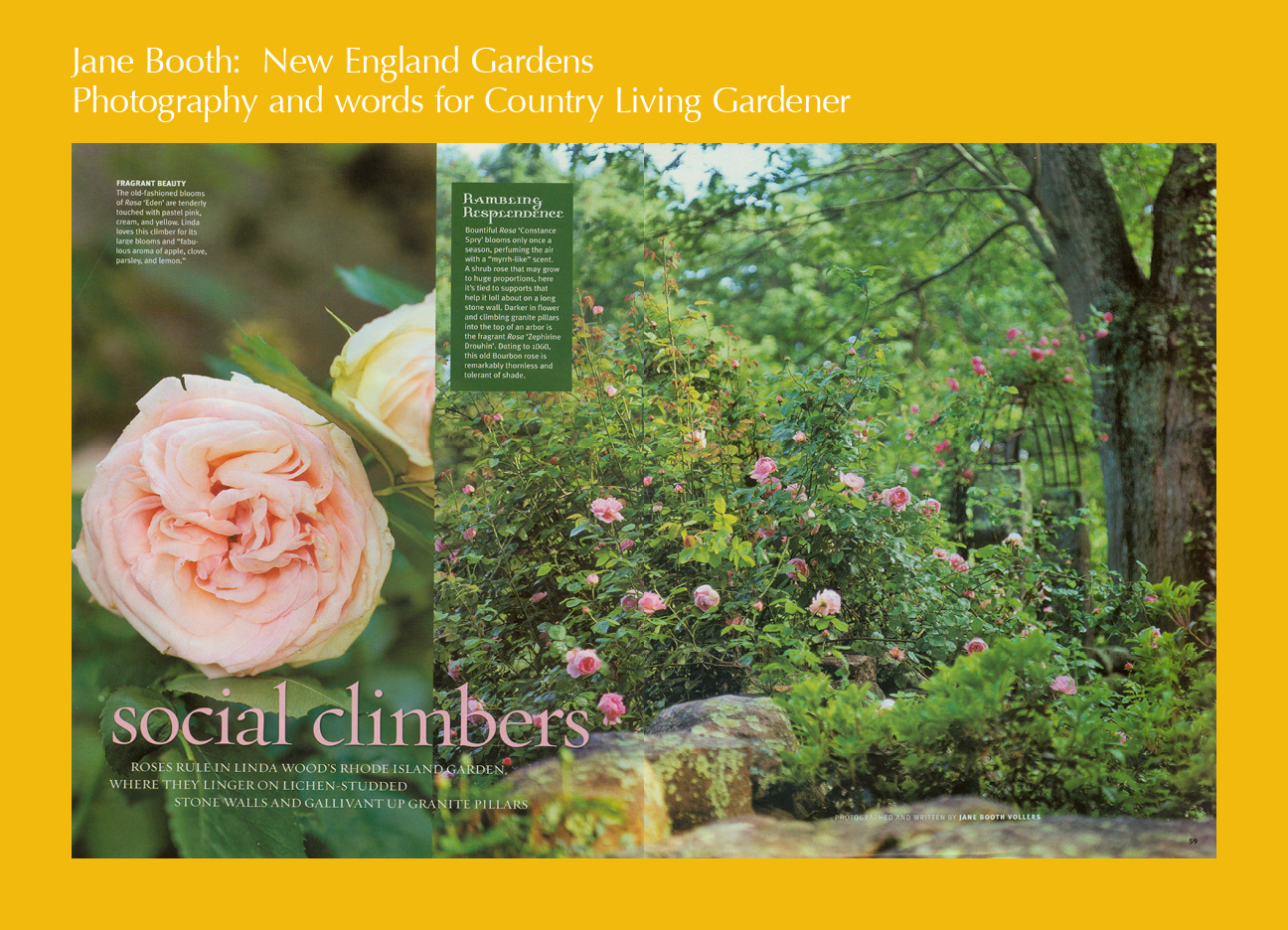
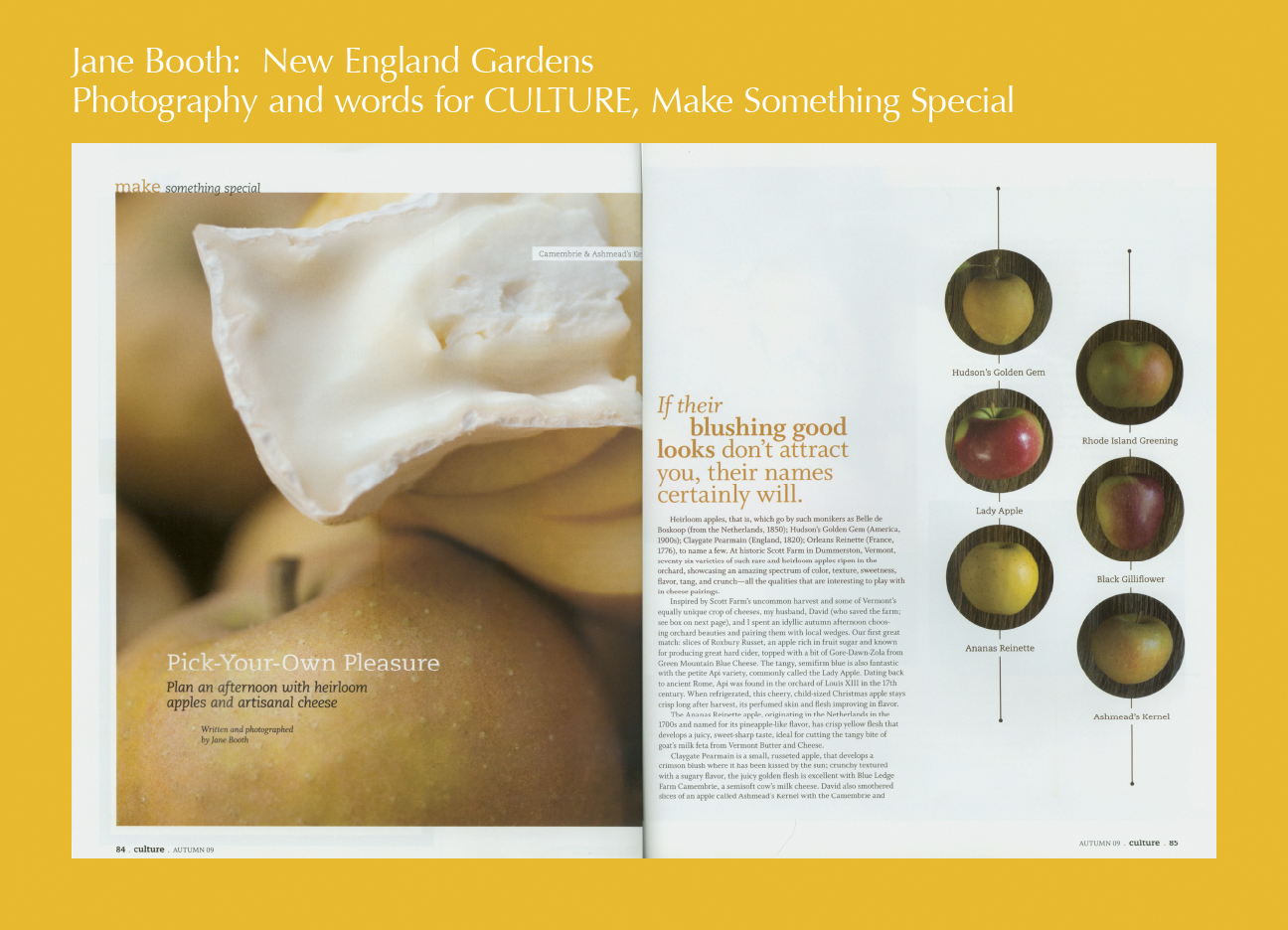
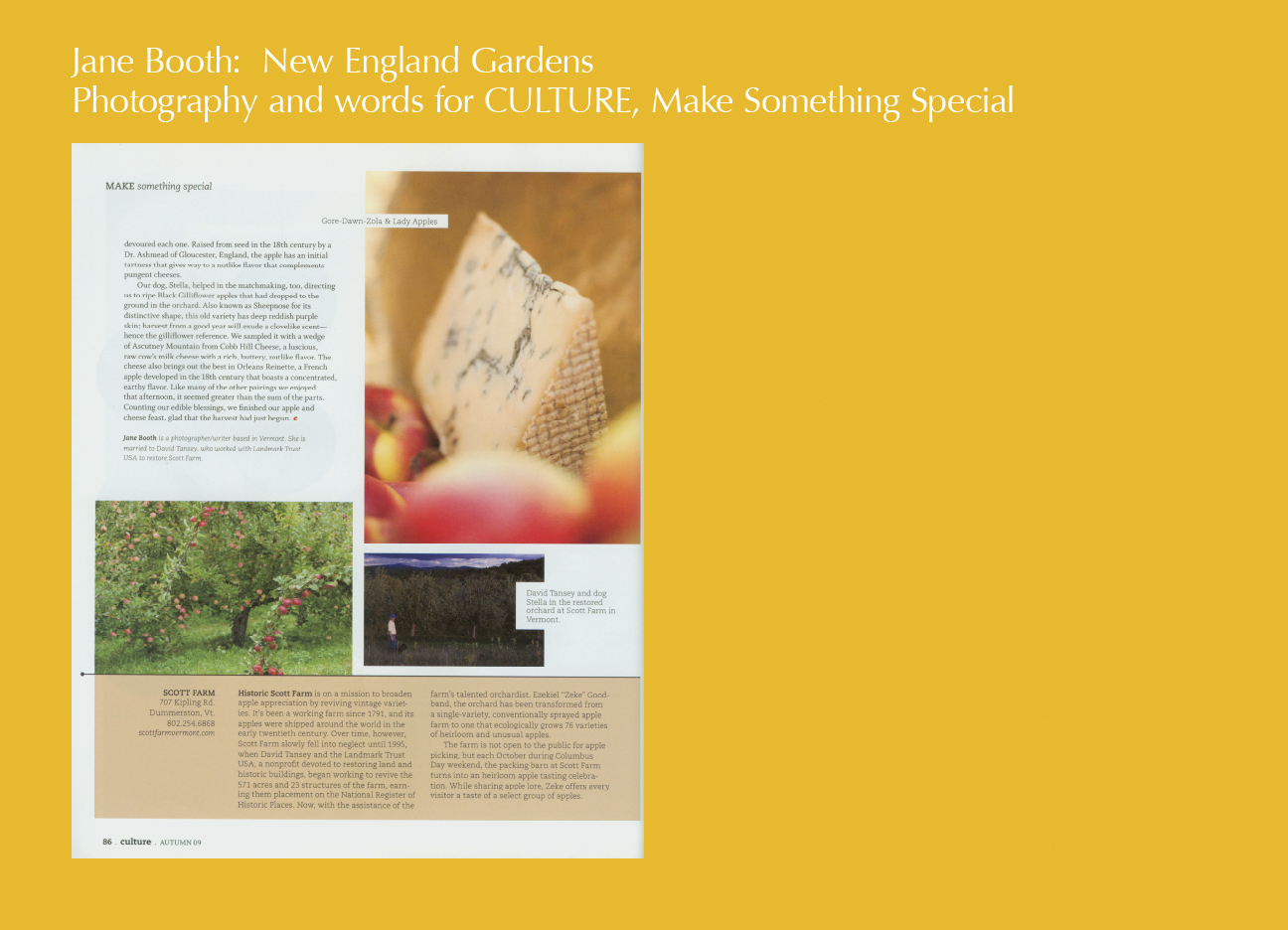
Pick Your Own Pleasure, Culture

Poverty Lane Orchards and Alyson’s Orchard in New Hampshire and Champlain Orchards in Vermont offer a good selection of heirloom apples.
Please ask Jane Booth for permission to reproduce her copyrighted photographs and/or writing. Email jane.booth.1@gmail.com or call (802) 866-3329. Jane has spent a good part of her career photographing and writing about gardens and small farms for Gardens Illustrated, Yankee Magazine, Country Living, Country Living Gardens, Better Homes & Gardens, Old House Journal’s New Old House, among others and Cape Cod Home where she produced an ongoing column and feature stories.
David Tansey founded The Landmark Trust USA in 1991. He is the past president of The Landmark Trust USA and The Scott Farm and was involved in every step of revitalizing Landmark Trust USA and Scott Farm properties.
Heirloom Apple Pie
It’s lunch time and poor us, all we have to eat is a fresh-baked apple pie filled with the last of the apples gleaned in the fall — Bramley’s Seedling, England’s favorite baking apple originating in the early 1800s; Northern Spy a 1800s seedling from New York; and one of my favorite baking apples – Rhode Island Greening, a colonial apple from about 1650 discovered in Green’s End, Newport where a Mr. Green ran a tavern. The farm’s cooler has been turned off since December, yet these old timey apples are still firm and have held up wonderfully in long months of storage.
My husband, David Tansey, loves making pie and because he is such a good pie crust maker I have stayed away from the task until now. I begged him for his recipe at breakfast and parcel it together but ask him to roll out the dough as it seems too wet (he knew it was just fine).
When my mentor left for work, I forged ahead with the filling making things up as I went along. In the refrigerator I found the balance of a small bottle of iced cider from the Monteregie region of Quebec and used it to moisten peeled apple slices letting them mull around in the sweet scent of concentrated fermented cider while I fiddled with the dough. Just before topping the pie I realize I haven’t added any flour or sugar to the mix of apples and sprinkle a tablespoon of each over the mound of slices. Simple.

Calville Blanc d’Hiver, the classic French baking apple has a crown shaped base. It is my absolute favorite when baking a tarte tatin.
The pie, much to my delight, is a success. My husband admires the way it looks it from the time he arrives home for lunch. Admires it more when he tucks into a slice. And says all things yummy when I suggest he try a bite with a piece of Grafton’s clothbound cheddar attached to his forkful of apples and crust. We are both beaming. The cheese adds a sharp tangy crumbly bite cutting into the sweet sureness of apple, flavors melding into a taste sensation. We try the same effect again with a creamy cheddar from Shelburne Farms, not as sharp but just as nice with the pie. Tasting the clothbound cheddar again I tell David the cave-aged mushroom mustiness would be an excellent foil to the carmalized sweetness of a tarte tatin made with Calville Blanc d’Hiver, a fine French cooking apple dating to 1598. We vow to do just so when the new crop of apples are ready for harvest.
Please ask Jane Booth for permission to reproduce her copyrighted photographs and/or writing. Email jane.booth.1@gmail.com. Jane has spent a good part of her career photographing and writing about gardens and small farms for Gardens Illustrated, Yankee Magazine, Country Living, Country Living Gardens, Better Homes & Gardens, New Old House Journal, and Cape Cod Home where she produced an ongoing column and feature stories.
David Tansey is the founder of The Landmark Trust USA and past president of Landmark and The Scott Farm. He was involved in every step of revitalizing Landmark Trust USA and Scott Farm properties and loves using heirloom apples when he bakes a pie.
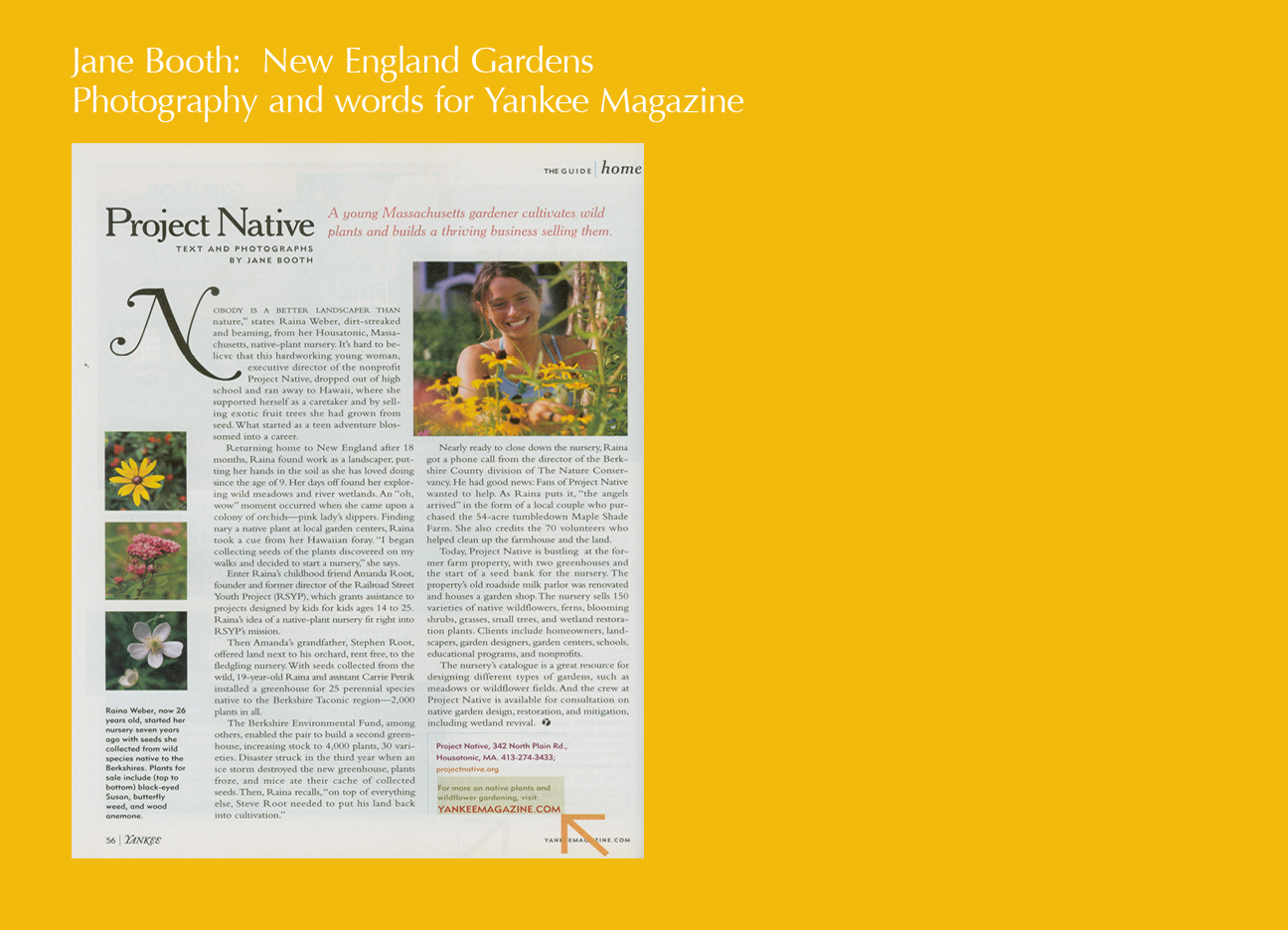
Project Native, YANKEE MAGAZINE

http://www.projectnative.org
“Nobody is a better landscaper than nature,” states Raina Weber, dirt-streaked and beaming from her Housatonic, Massachusetts, native-plant nursery.
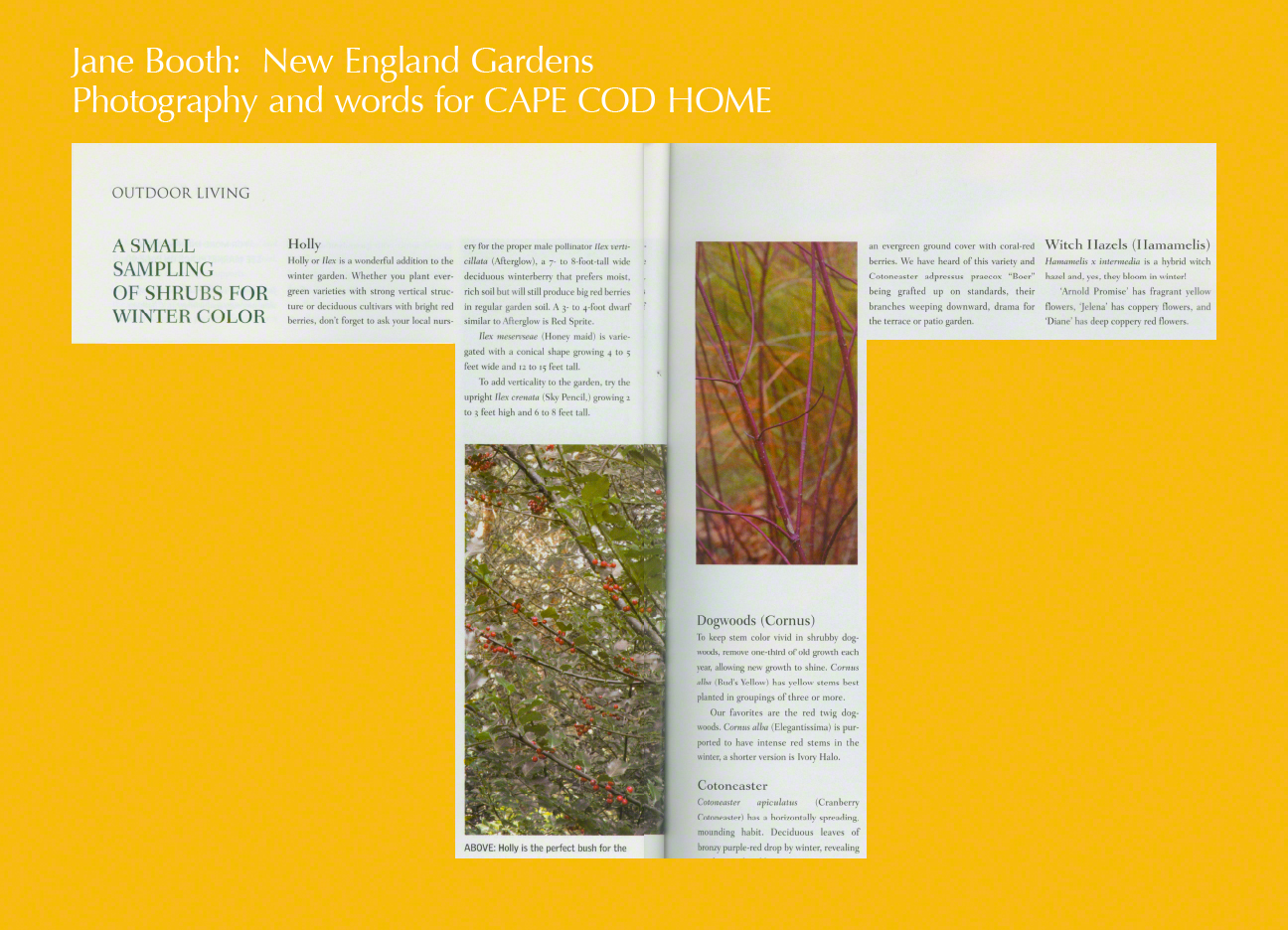
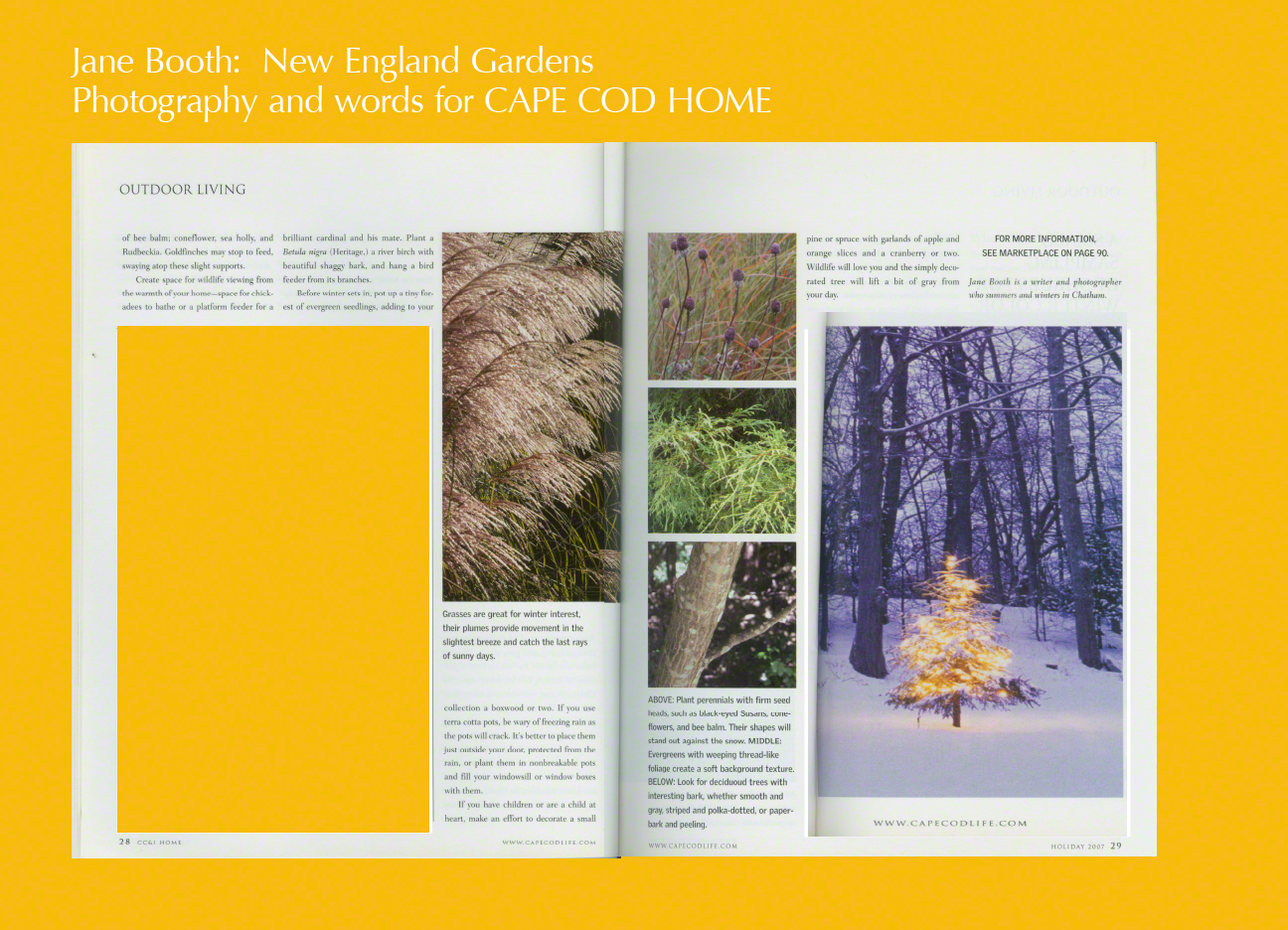
Winter Interest, CAPE COD HOME

Let’s face it. Cape Cod can get downright gloomy in the winter months. Gray sky, gray ocean, even marsh grasses in mellow shades of rust and yellow moving merrily in the wind are soon beaten down by snow and rain. What’s a sun-loving, home-owning gardener to do? Plant and sculpt with winter interest in mind.

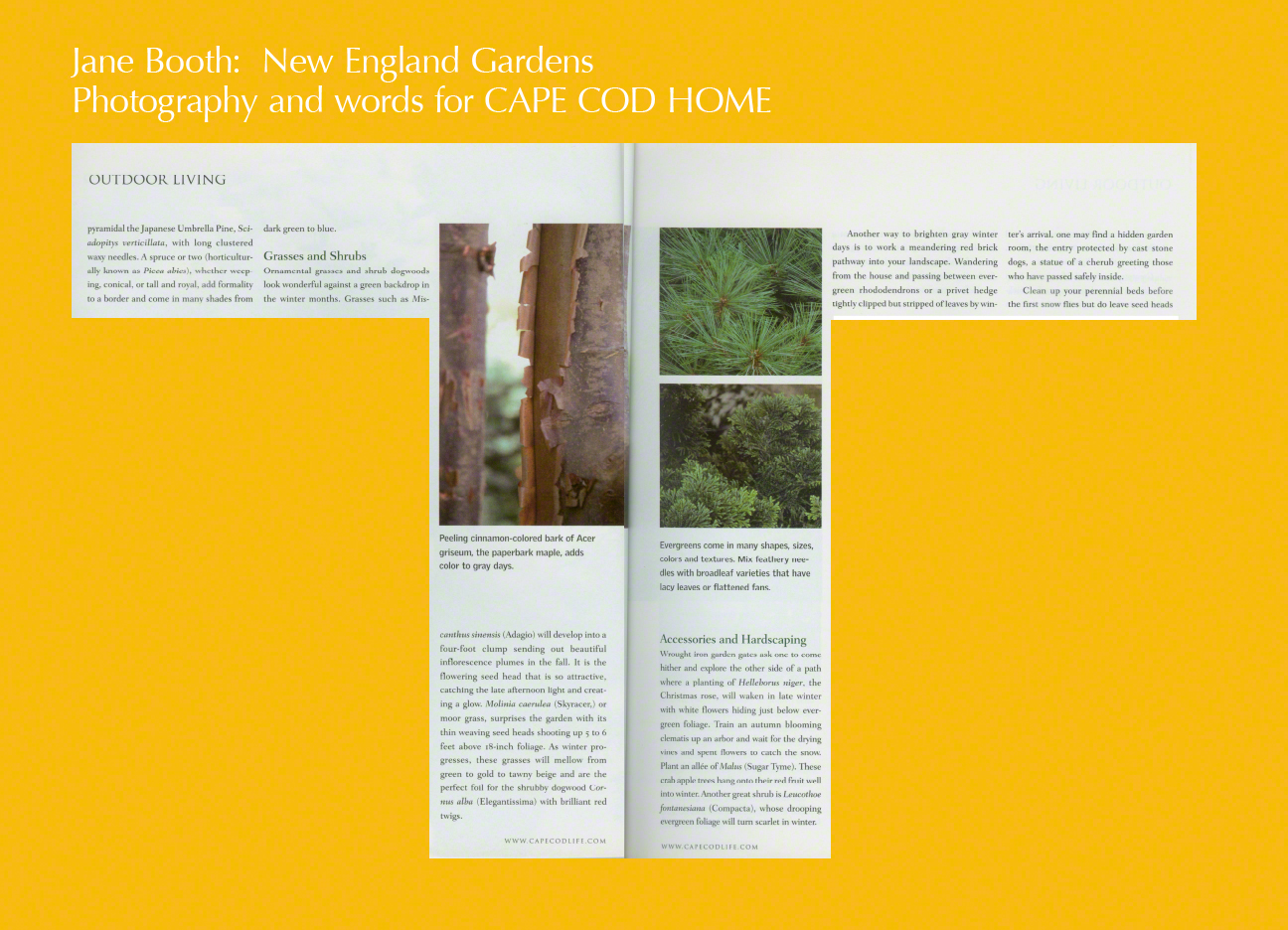
Choose specimen trees with unusual bark such as the Japanese Trident maple, Acer buergeriannum, with peeling bark offering up shades of gold, brown, and orange. Another peeler is the paperbark maple, Acer griseum, in cinnamon shades.

Plant a textured border of mixed broadleaf and needled evergreens to catch the snow — Juniperus (junipers) come in many shapes and sizes, from low and creeping to tall and columnar, and are painted in shades of pale blue-green to vivid gold. They are a perfect evergreen for the Cape as they prefer sandy soil and tolerate salt spray.

Ornamental grasses and shrub dogwoods look wonderful against a green backdrop in the winter months. Grasses such as Miscanthus sinensis will develop into a four-foot clump sending out beautiful inflorescence plumes in the fall. It is the flowering seed head that is so attractive, catching the late afternoon light and creating a glow.
Movement in the Garden, CAPE COD HOME

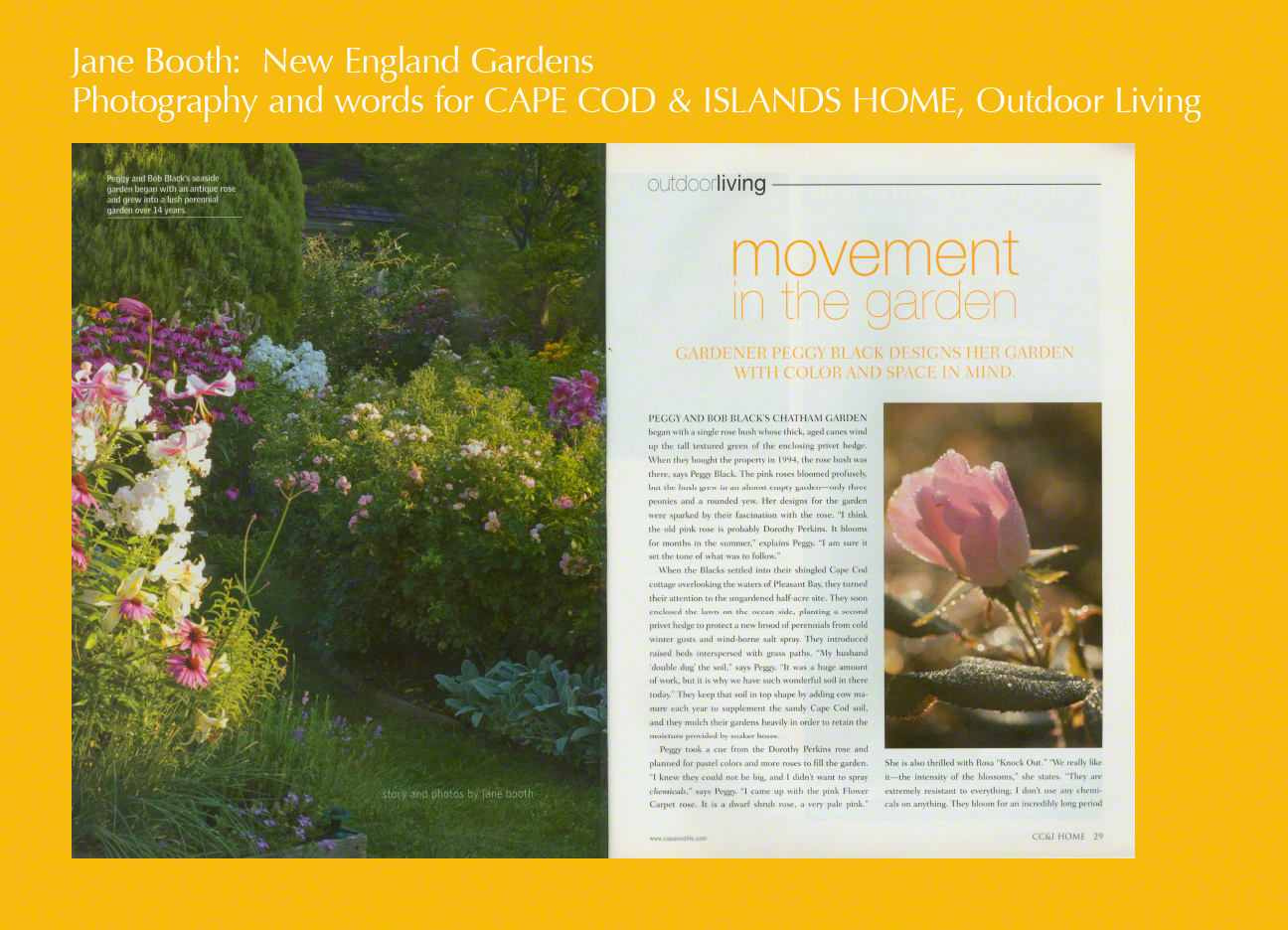
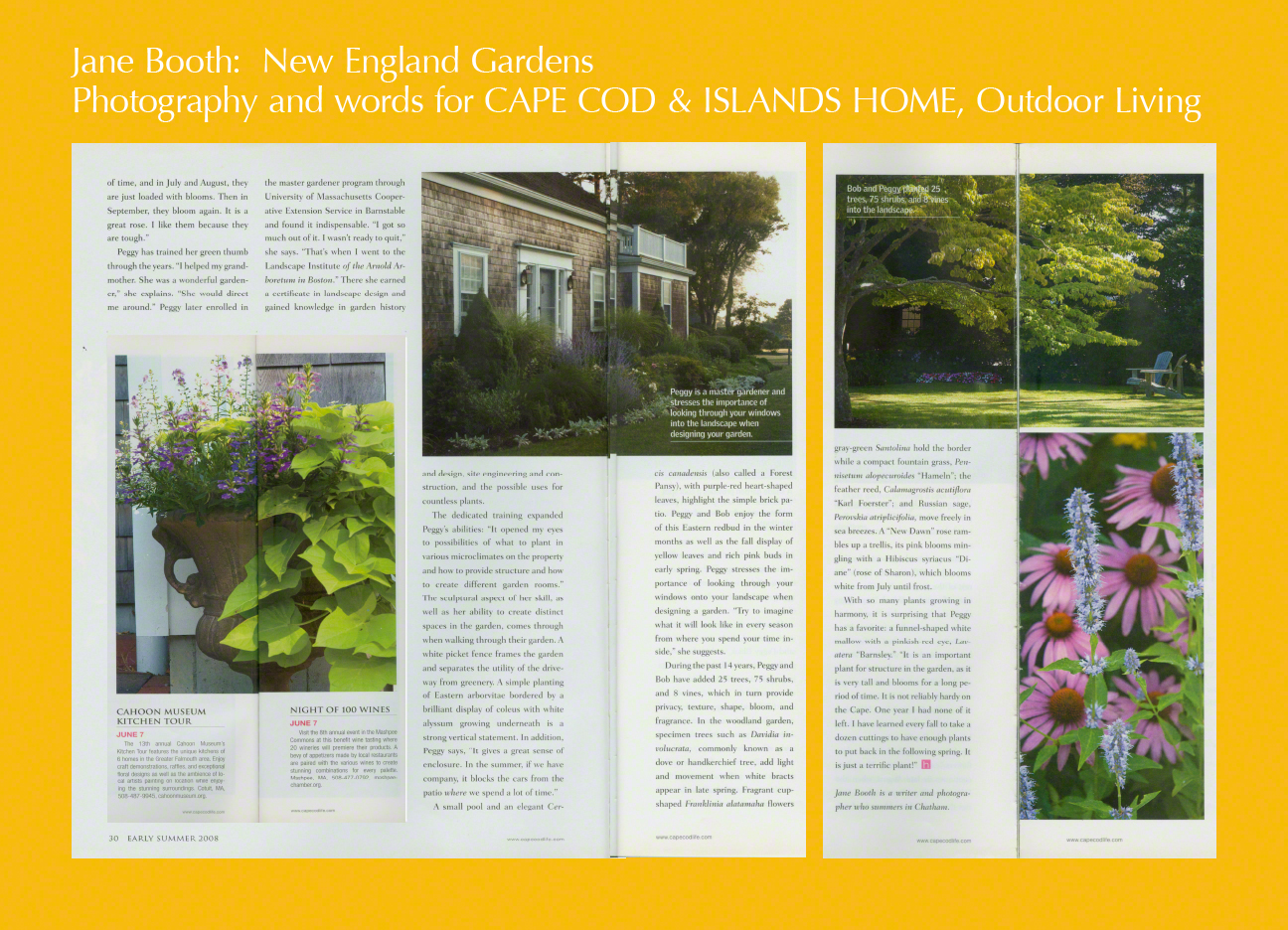
Peggy and Bob Black’s Chatham garden began with a single rose bush whose thick, aged canes wind up the tall textured green of an enclosing privet hedge. The pink roses bloomed profusely, but the bush grew in an almost empty garden. “I think the old pink rose is probably Dorothy Perkins,” says Peggy. “I am sure it set the tone of what was to follow.”

Finding all-day sun where the old rose resides, the homeowners enclosed the lawn on the ocean side planting a secondary hedge of privet to protect a new brood of perennials from cold winter gusts and wind-born salt spray.

Peggy has a knack for elegant ladylike combinations of pink and white with a touch of blue or a splash of yellow to spark the overall effect. When asked about her color scheme she answers that she and Bob often sit at the edge of the garden under the pergola. “Because the color is so close to where we sit, I decided on a cooler color scheme rather than a hot one.” Peggy admits ‘Dorothy Perkins’ was an impetus for pastel colors and more roses.

Peggy’s green thumb has had training. She enrolled in the master gardener program through University of Massachusetts Cooperative Extension Service in Barnstable and found it indispensable. “I got so much out of it, I wasn’t ready to quit … that’s when I went to The Landscape Institute (of the Arnold Arboretum in Boston)” where she earned a Certificate in Landscape Design and gained knowledge in garden history and design, site engineering and construction, and the possible uses for many, many plants.
HELPFUL LINKS:
Cape Cod Cooperative Extension Service/UMass
http://www.capecodextension.org/Horticulture/
Cape Cod Home
http://www.capecodlife.com/capecodhome
The Arnold Arboretum of Harvard University, The Landscape Institute
Truro Twilight, CAPE COD HOME

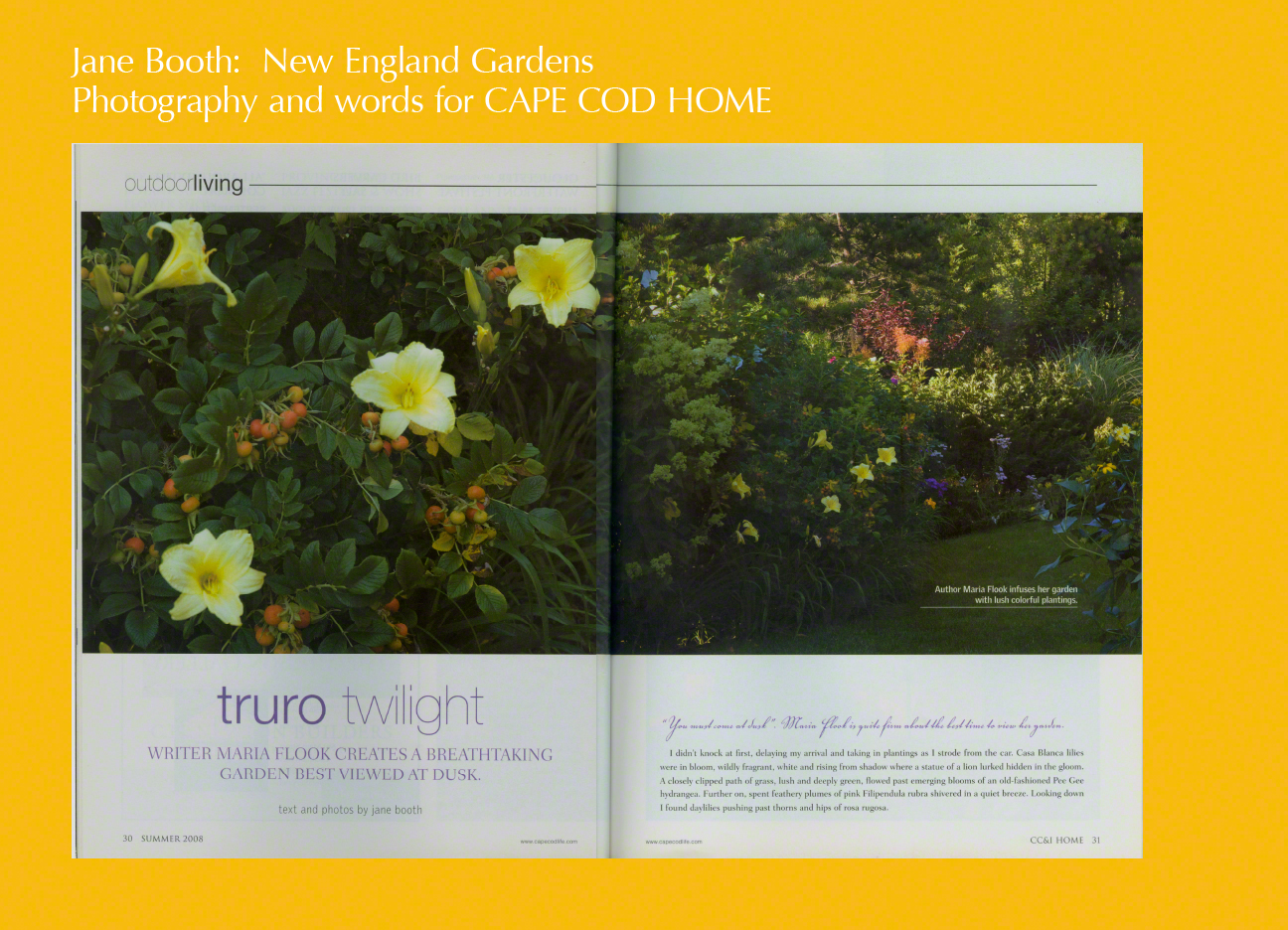
“You must come at dusk”, was Truro author Maria Flook’s invitation to her garden. I didn’t knock at first, delaying my arrival and taking in plantings as I strode from the car. Casa Blanca lilies were in bloom, wildly fragrant, white and rising from ado where a statue of a lion lurked hidden in the gloom.

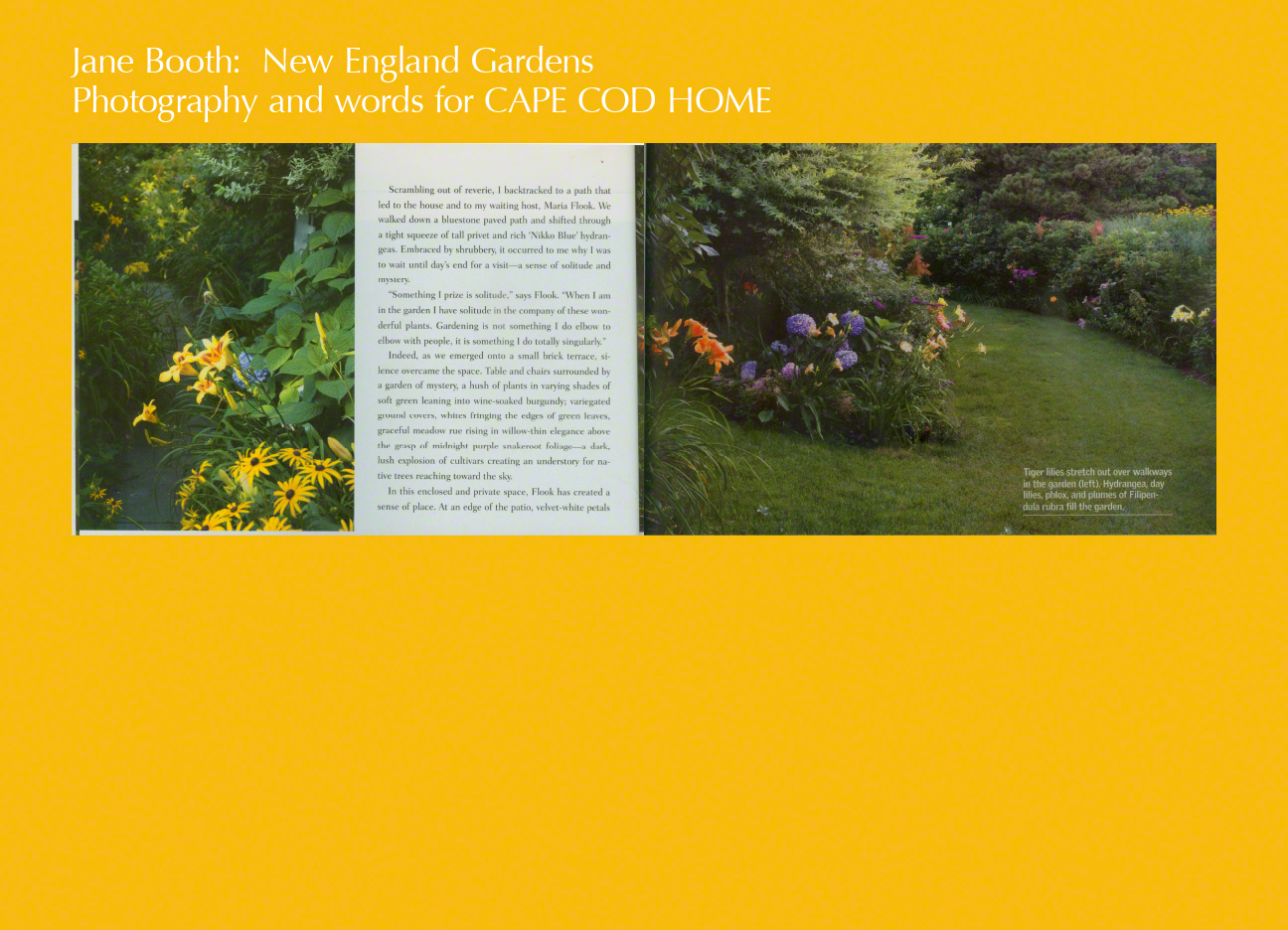
Indeed, as we emerged onto a small brick terrace, silence overcame the space. Table and chairs surrounded by a garden of mystery, a hush of plants in varying shades of soft green leaning into wine-soaked burgundy variegated ground covers, whites fringing the edges of green leaves….

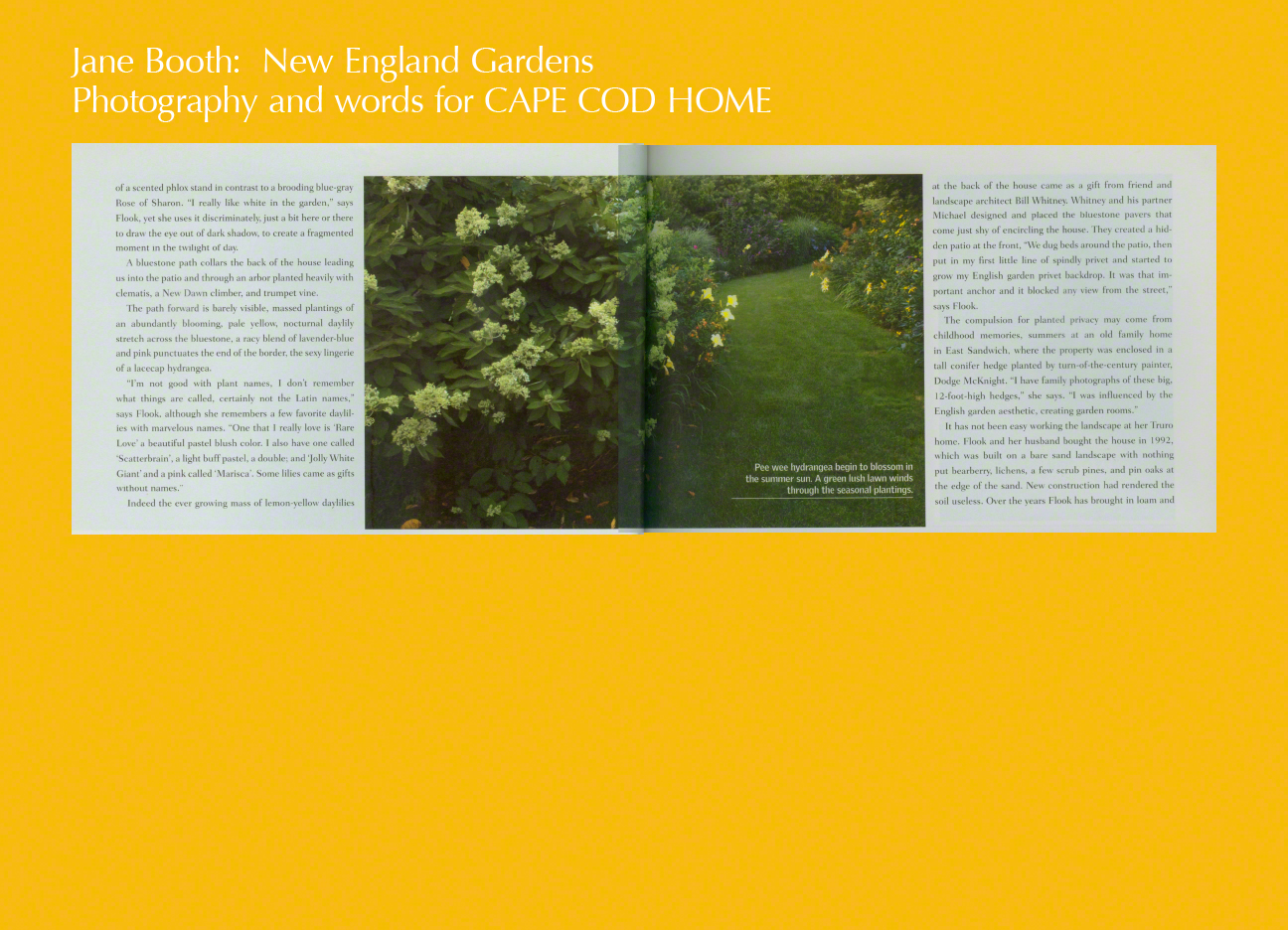
“I really like white in the garden,” says Flook, yet she uses it discriminately, just a bit here or there to draw the eye out of dark shadow, to create a fragmented moment in the twilight of day.

“I really like white in the garden,” says Flook, yet she uses it discriminately, just a bit here or there to draw the eye out of dark shadow, to create a fragmented moment in the twilight of day.

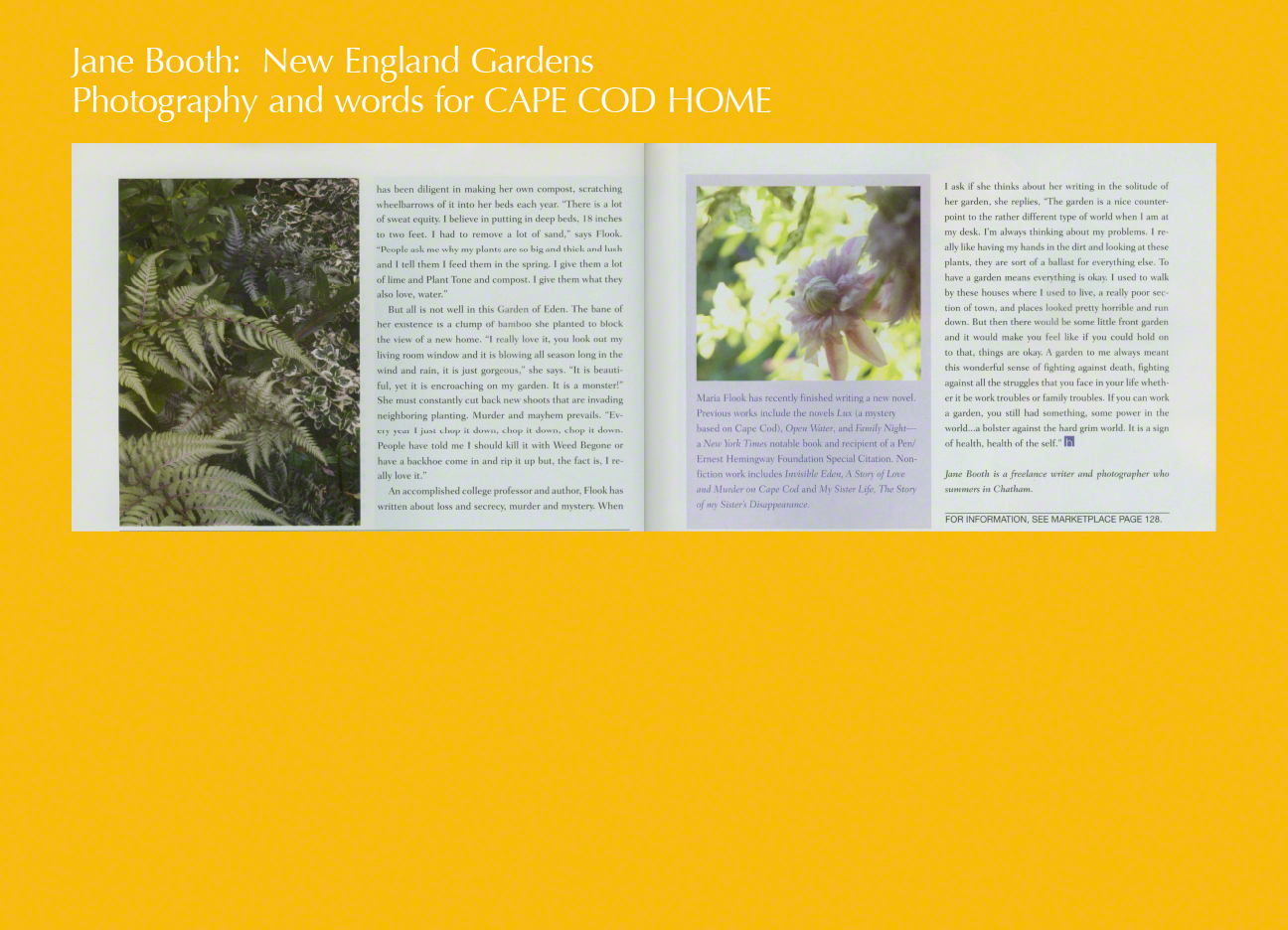
“A garden to me always meant this wonderful sense of fighting against death, fighting against all the struggles that you face in your life whether it be work troubles or family troubles. If you can work a garden, you still had something, some power in the world…a bolster against the hard grim world. It is a sign of health, a health of the self.” Wonderful words of wisdom from writer and gardener Maria Flook.
Kitchen Garden, CAPE COD HOME

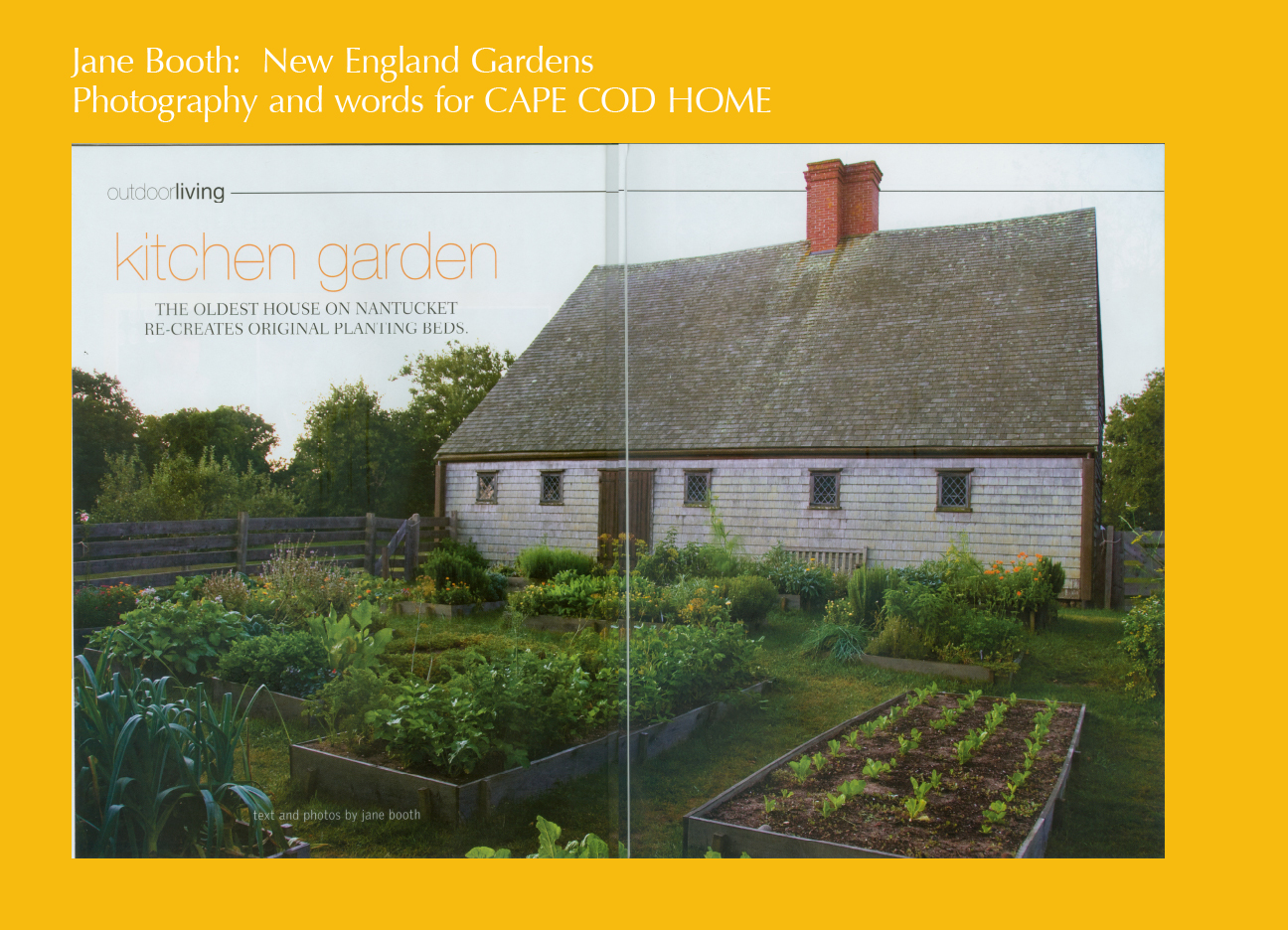
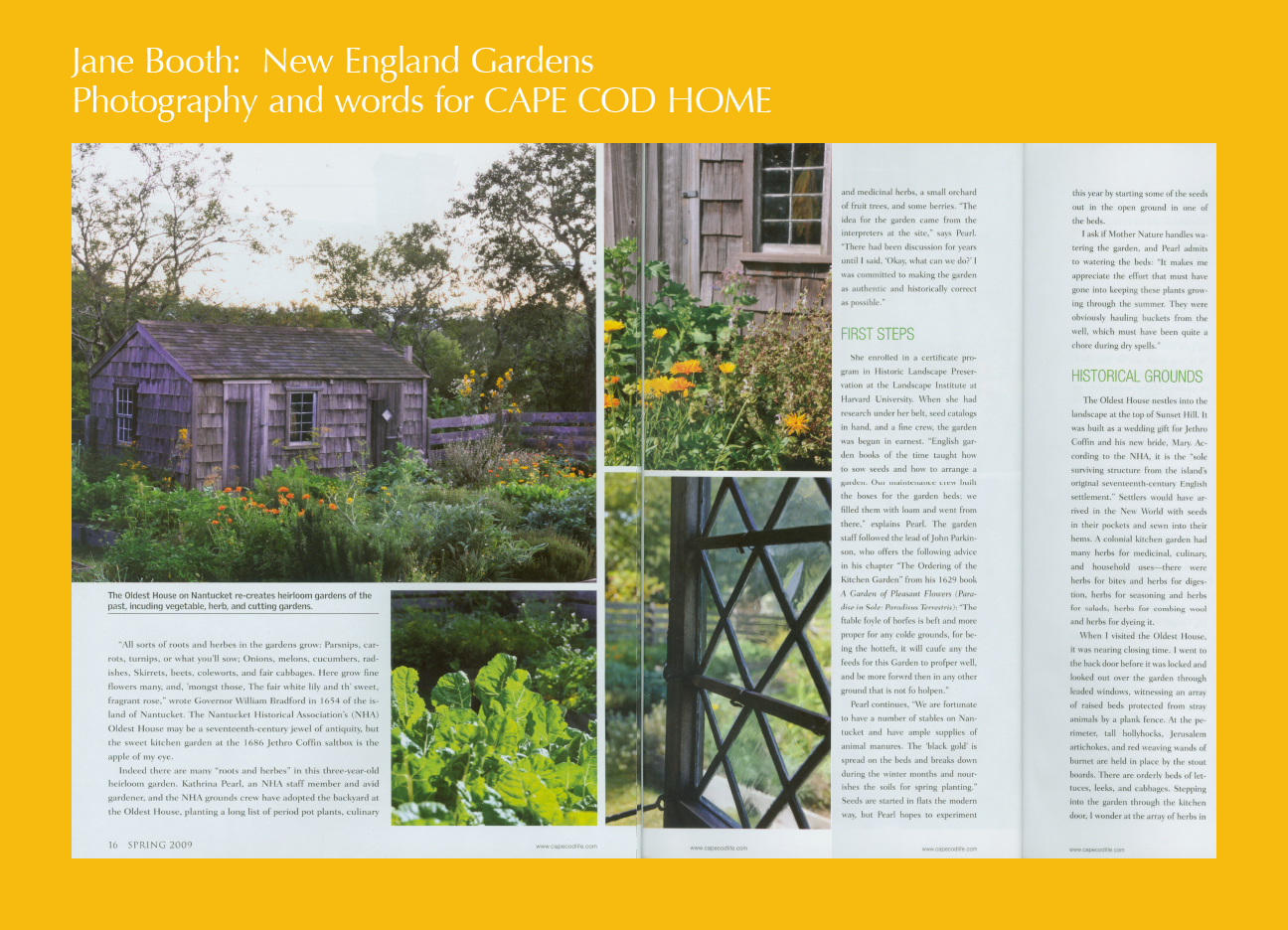
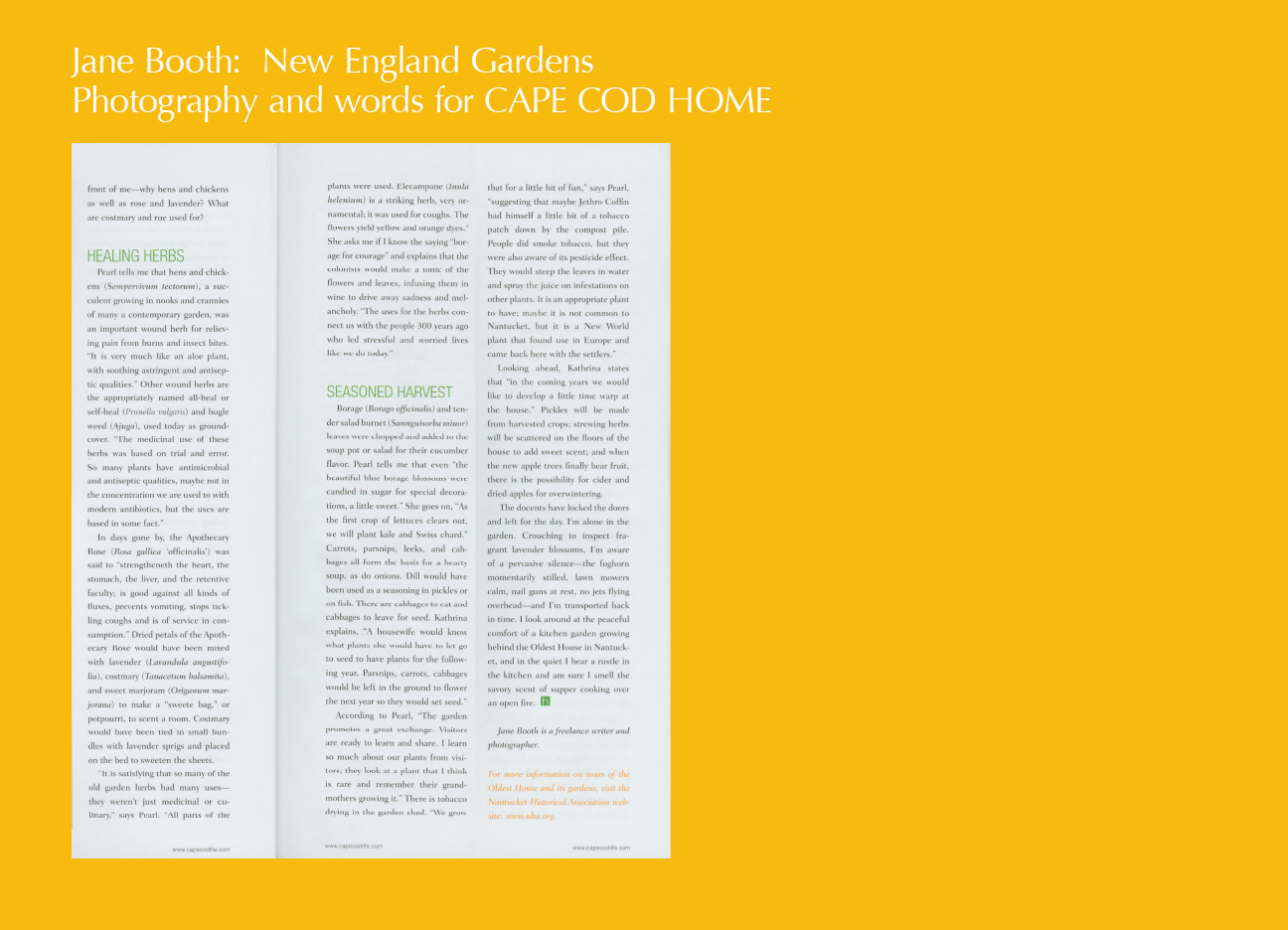
The Nantucket Historical Association’s Oldest House may be a seventeenth-century jewel of antiquity, but the sweet kitchen garden at the 1686 Jethro Coffin saltbox is the apple of my eye.

Kathrina Pearl, a Nantucket Historical Association (NHA) staff member and avid gardener, and the NHA grounds crew have adopted the backyard at the Oldest House, planting a long list of period pot plants, culinary and medicinal herbs, a small orchard of fruit trees, and some berries. “The idea for the garden came from the interpreters at the site,” says Pearl.
Companion Planting, CAPE COD HOME

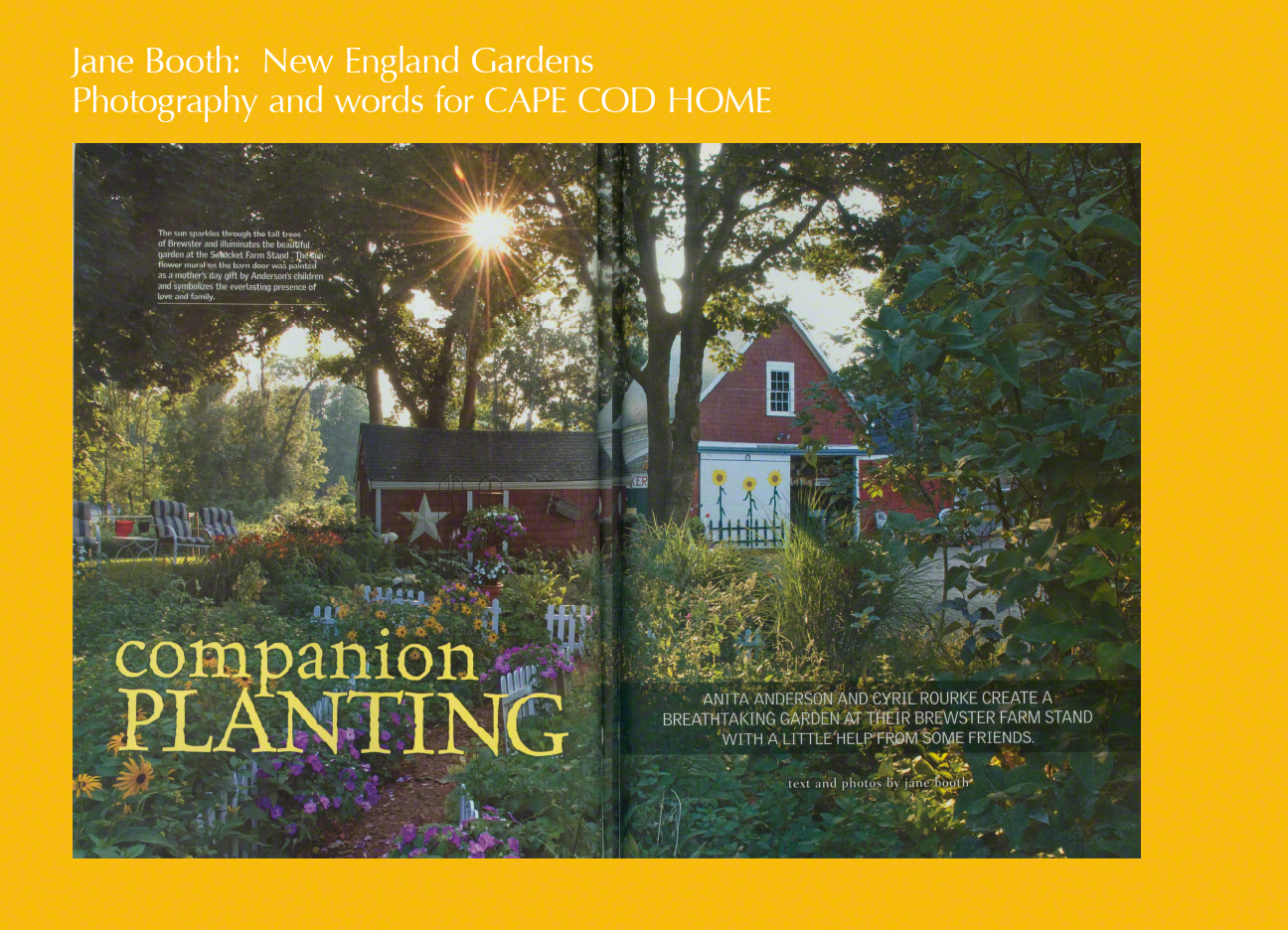
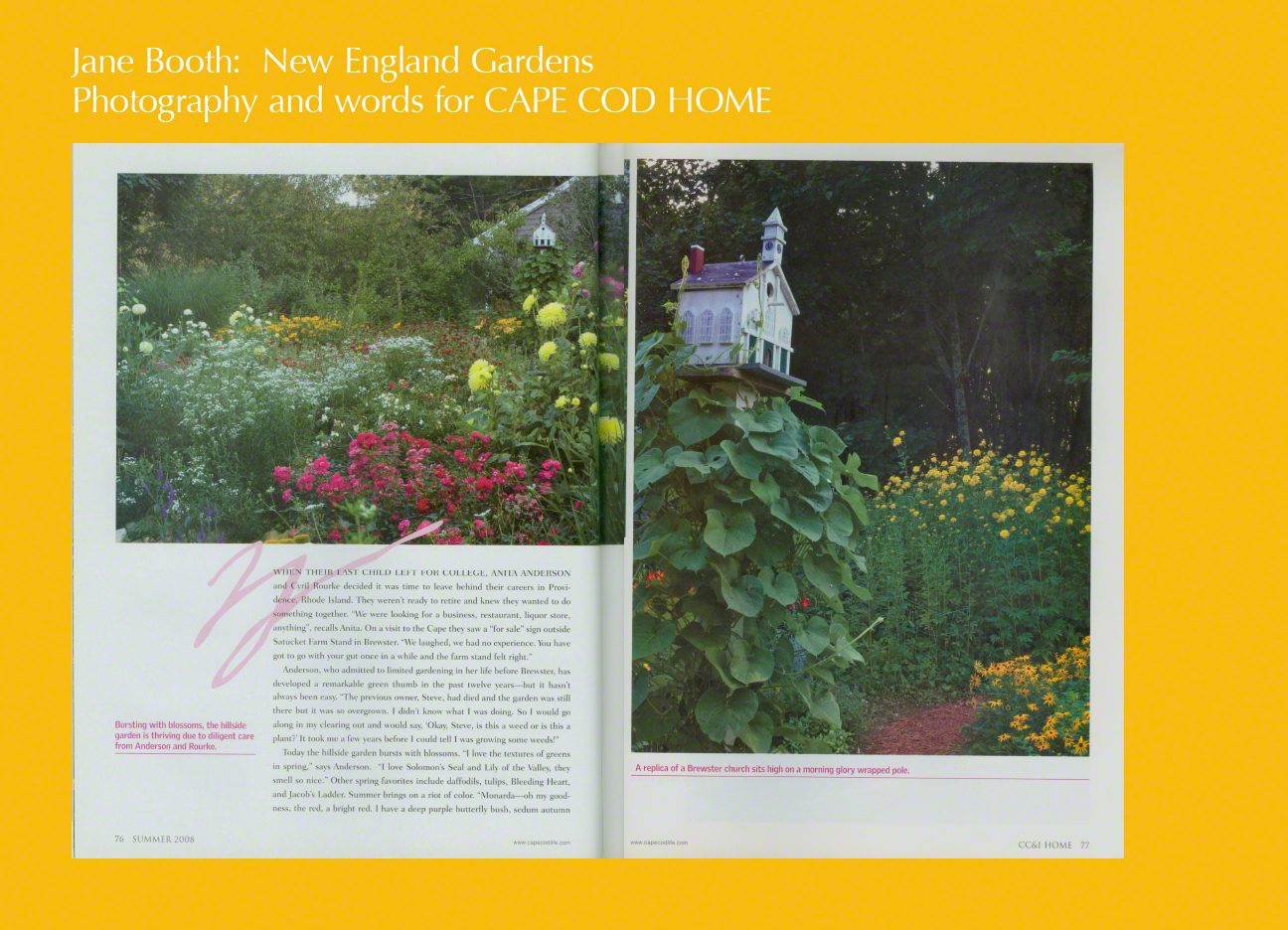
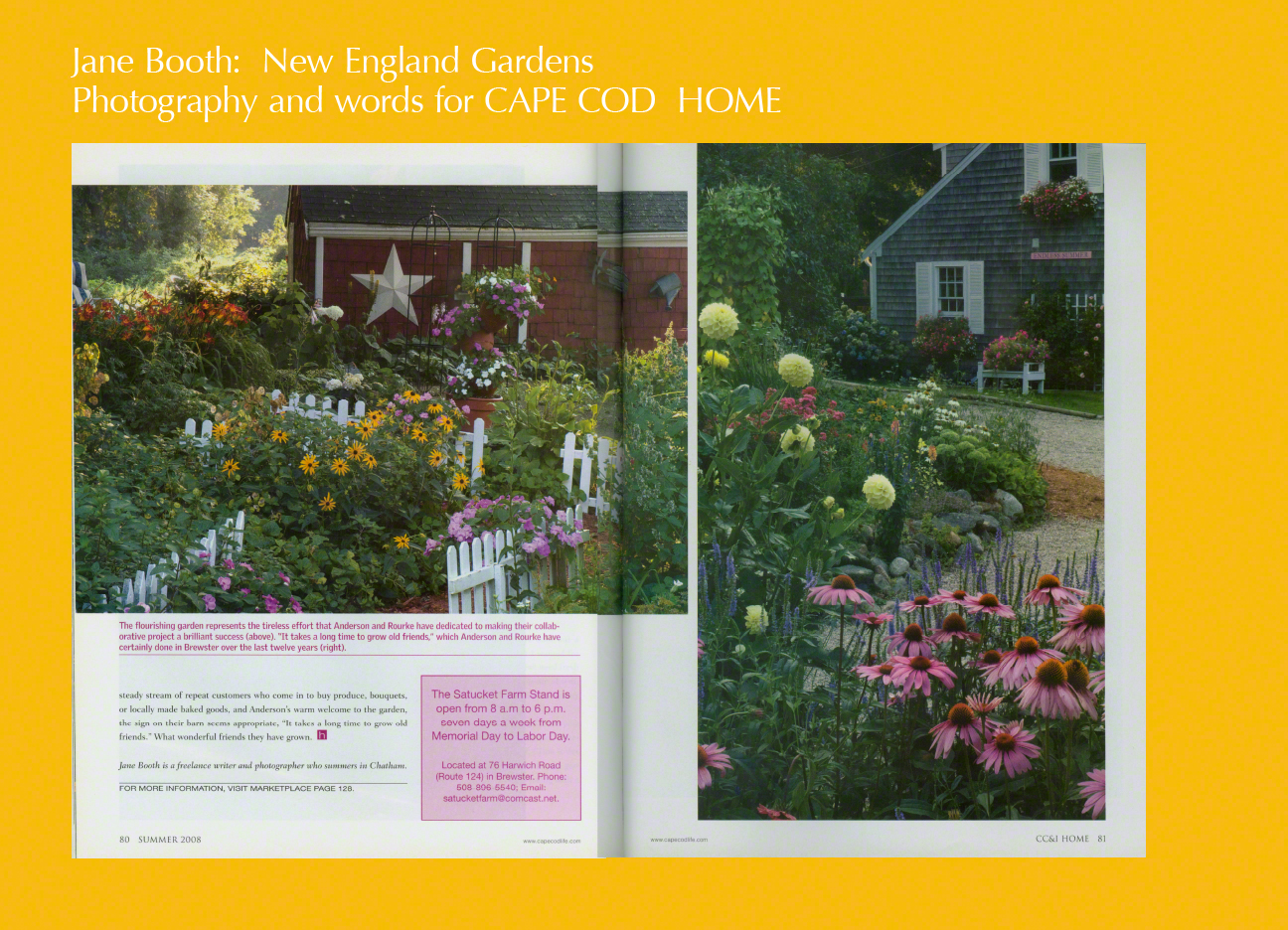
The hillside garden at Satucket Farm Stand in Brewster, Massachusetts bursts with blossoms. “I love the textures of greens in spring,” says Anita Anderson. “I love Solomon’s Seal and Lily of the Valley, they smell so nice.” Other spring favorites include daffodils, tulips, Bleeding Heart, and Jacob’s Ladder. Summer brings on a riot of color. “Monarda, oh my goodness, the red, a bright red. I have a deep purple butterfly bush, sedum autumn joy, tons of veronica, a blue balloon flower, astilbe in white and pink and red.”

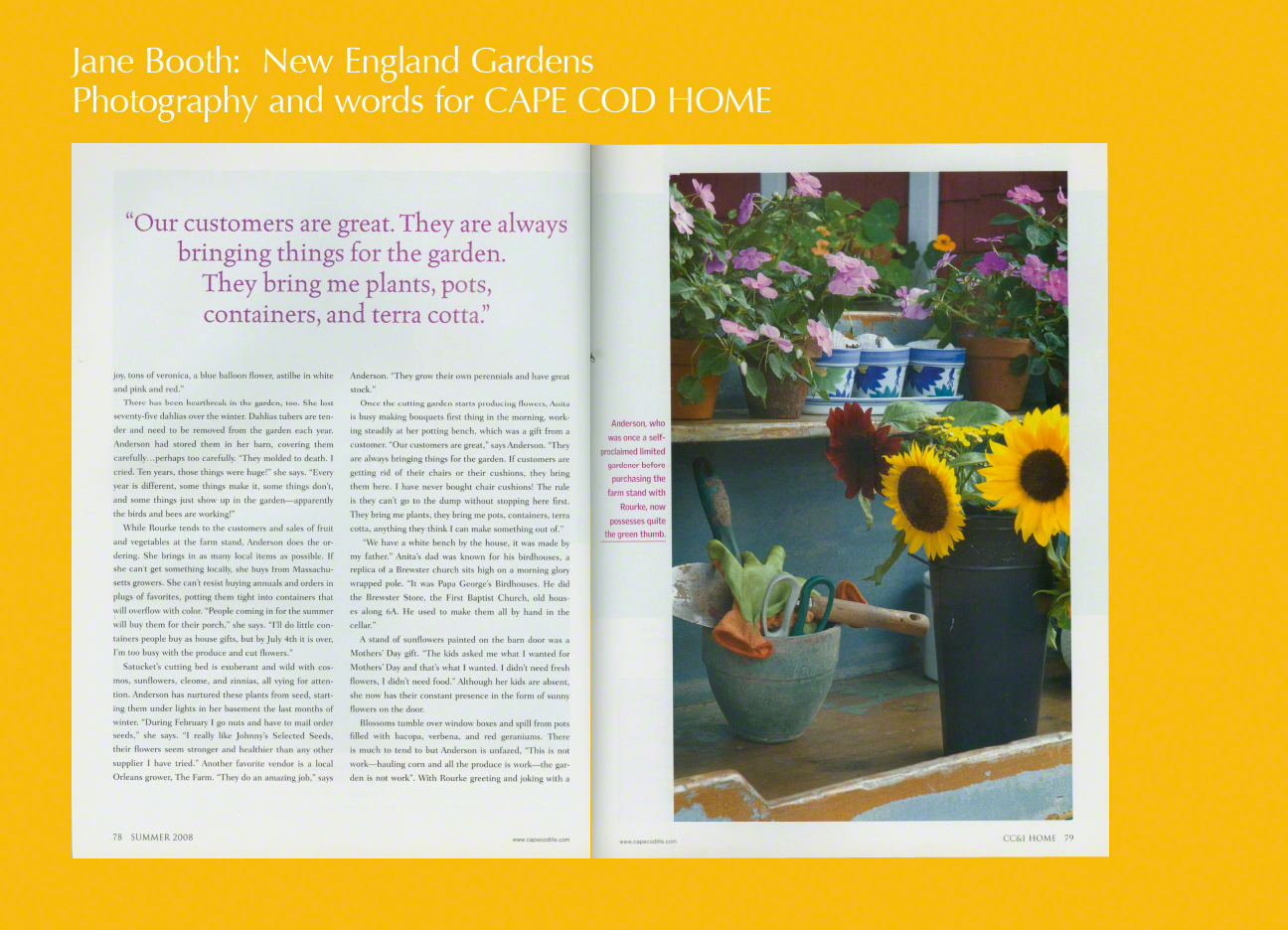
Satucket’s cutting bed is exuberantly wild with cosmos, sunflowers, cleome, and zinnias all vying for attention. Anita has nurtured these plants from seed, starting them under lights in her basement the last months of winter. “During February I go nuts and have to mail order seeds. I really like Johnny’s Selected Seeds, their flowers seem stronger, healthier than any other supplier I have tried.”

Another favorite vendor is a local Orleans grower, The Farm. “They do an amazing job. They grow their own perennials and have great stock.”
- A stand of sunflowers painted on the barn door was a Mothers’ Day gift. “The kids asked me what I wanted for Mothers’ Day and that’s what I wanted. I didn’t need fresh flowers, I didn’t need food.” Although her kids are absent, she now has their constant presence in the form of sunny flowers on the door.