Tag Archives: Jane Booth garden photographer

Kitchen Garden, CAPE COD HOME

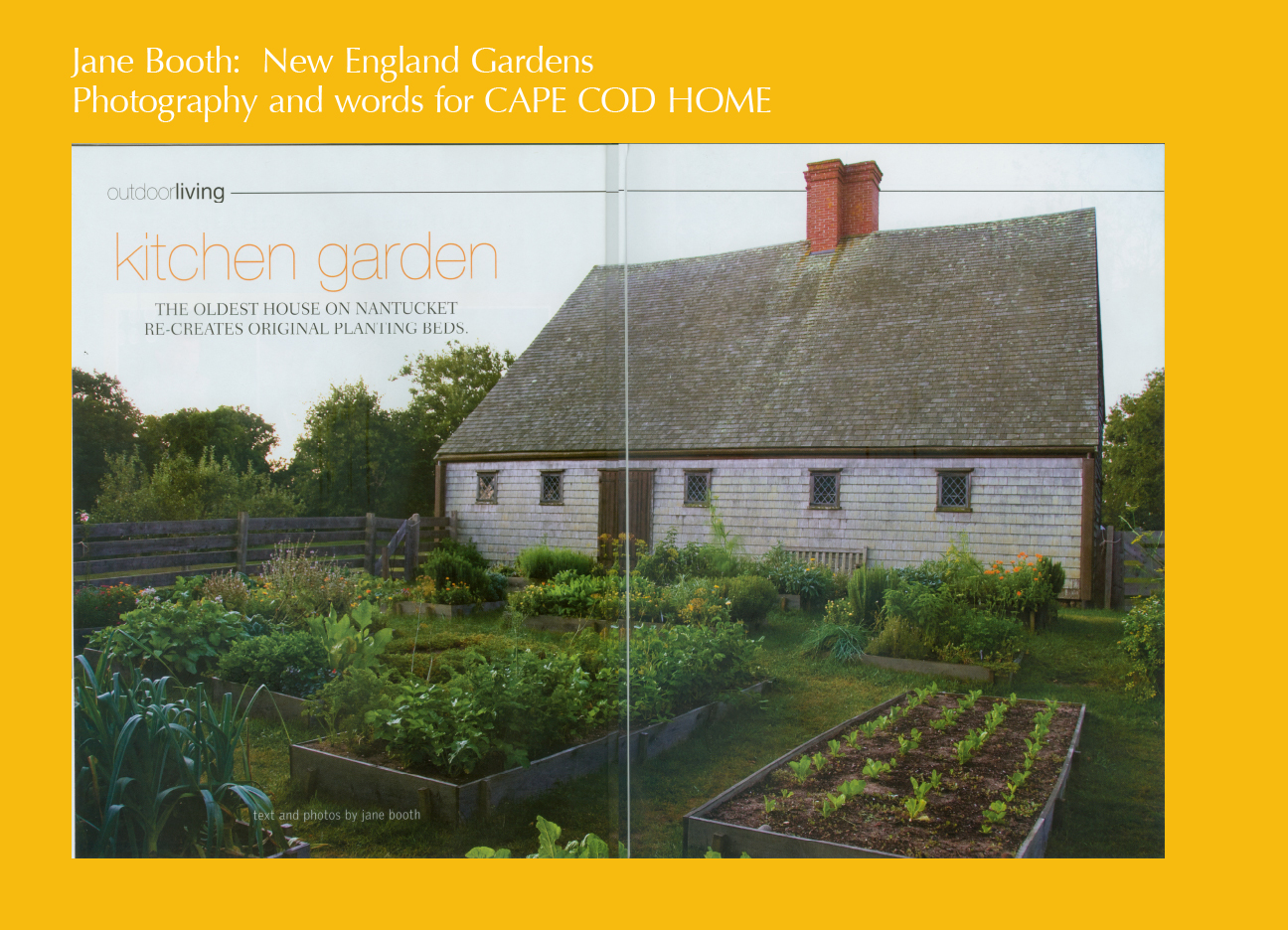
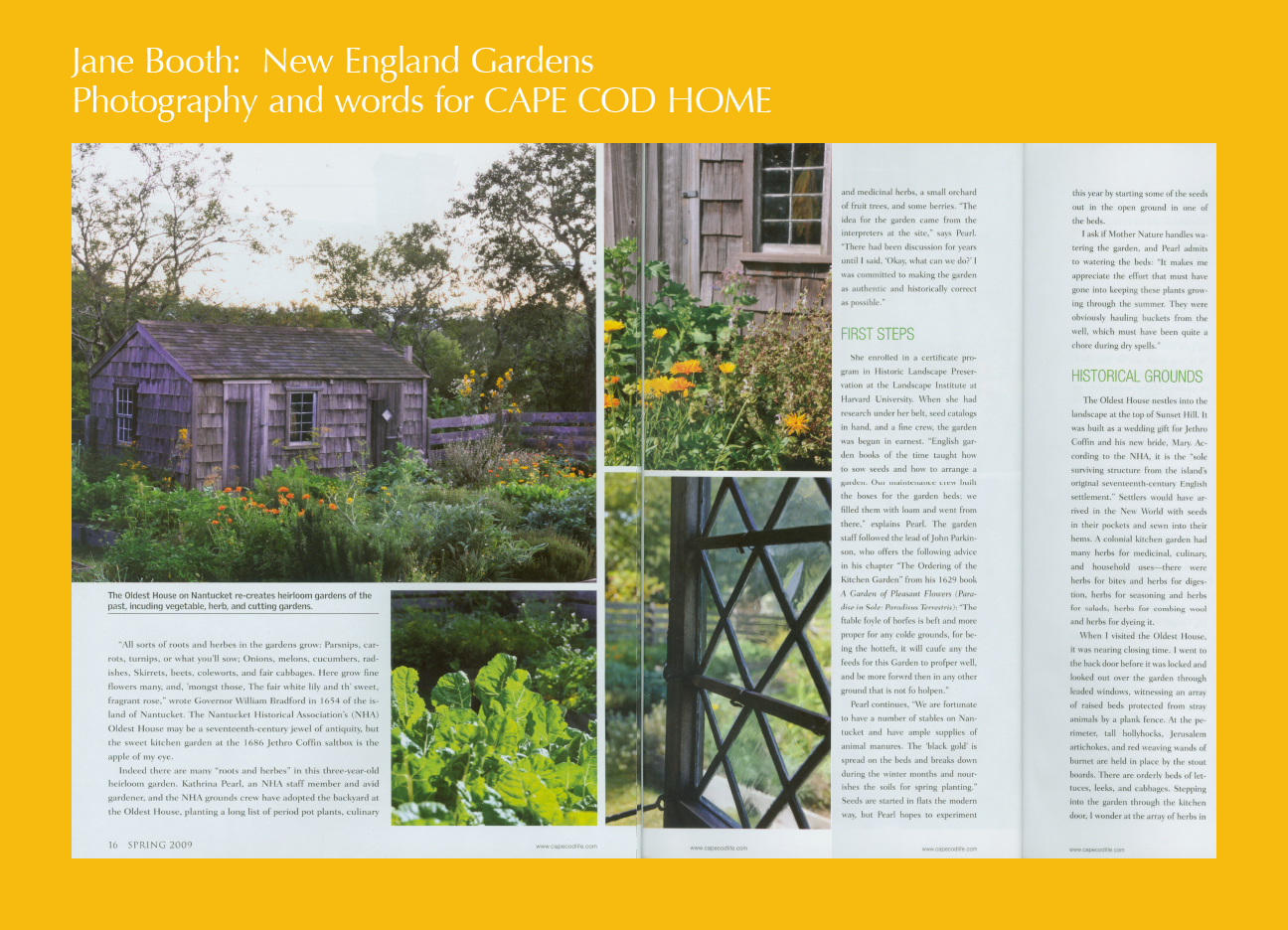
The Nantucket Historical Association's Oldest House may be a seventeenth-century jewel of antiquity, but the sweet kitchen garden at the 1686 Jethro Coffin saltbox is the apple of my eye.

The Nantucket Historical Association’s Oldest House may be a seventeenth-century jewel of antiquity, but the sweet kitchen garden at the 1686 Jethro Coffin saltbox is the apple of my eye.

Kathrina Pearl, a Nantucket Historical Association (NHA) staff member and avid gardener, and the NHA grounds crew have adopted the backyard at the Oldest House, planting a long list of period pot plants, culinary and medicinal herbs, a small orchard of fruit trees, and some berries.  "The idea for the garden came from the interpreters at the site," says Pearl.

Kathrina Pearl, a Nantucket Historical Association (NHA) staff member and avid gardener, and the NHA grounds crew have adopted the backyard at the Oldest House, planting a long list of period pot plants, culinary and medicinal herbs, a small orchard of fruit trees, and some berries. “The idea for the garden came from the interpreters at the site,” says Pearl.

The Oldest House nestles into the landscape at the top of Sunset Hill.  It was built as a wedding gift for Jethro Coffin and his new bride, Mary.  According to the NHA, it is the "sole surviving structure from the island's original seventeenth-century English settlement."

The Oldest House nestles into the landscape at the top of Sunset Hill. It was built as a wedding gift for Jethro Coffin and his new bride, Mary. According to the NHA, it is the “sole surviving structure from the island’s original seventeenth-century English settlement.”

http://www.capecodlife.com/capecodhome

Companion Planting, CAPE COD HOME

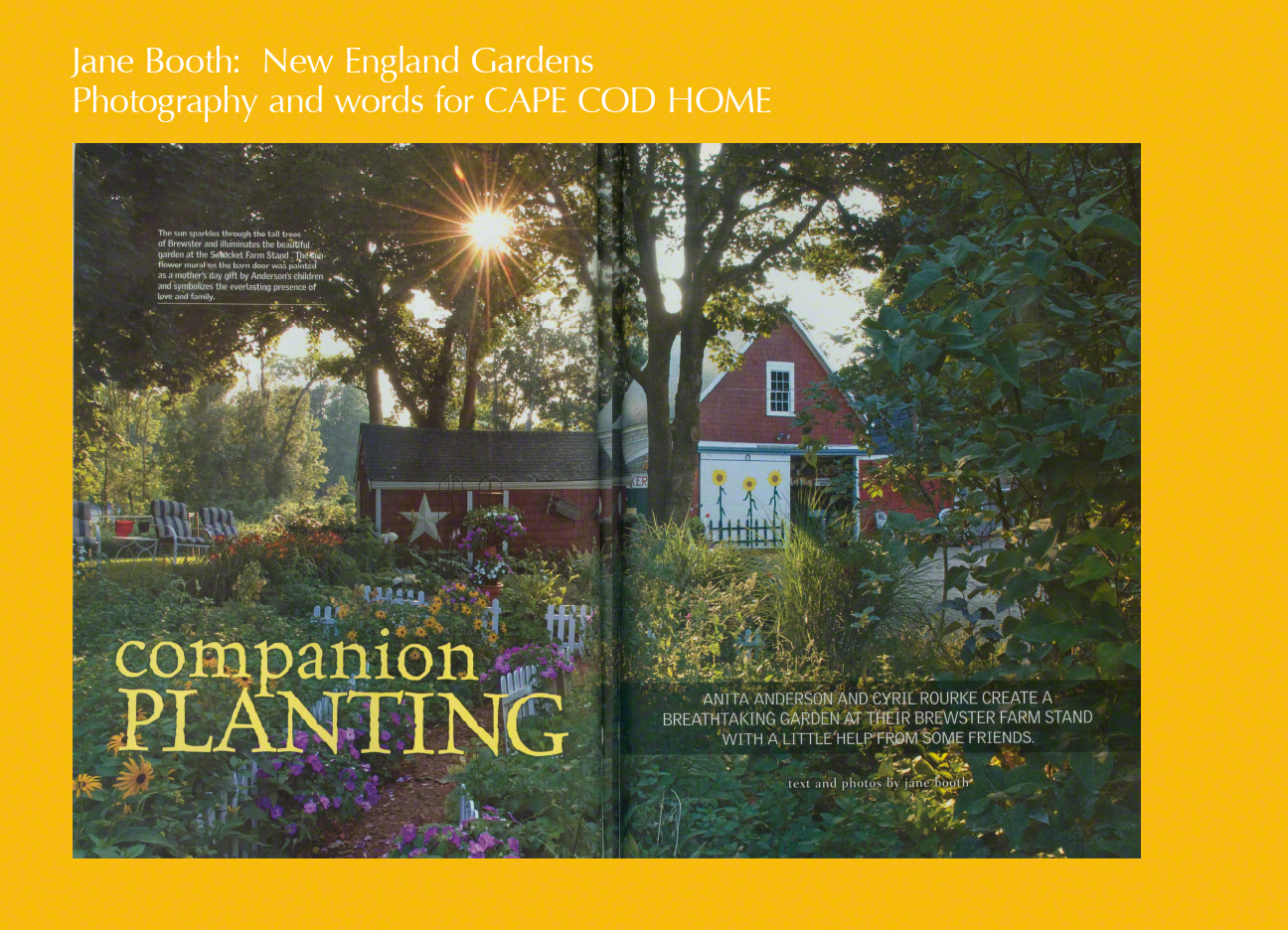
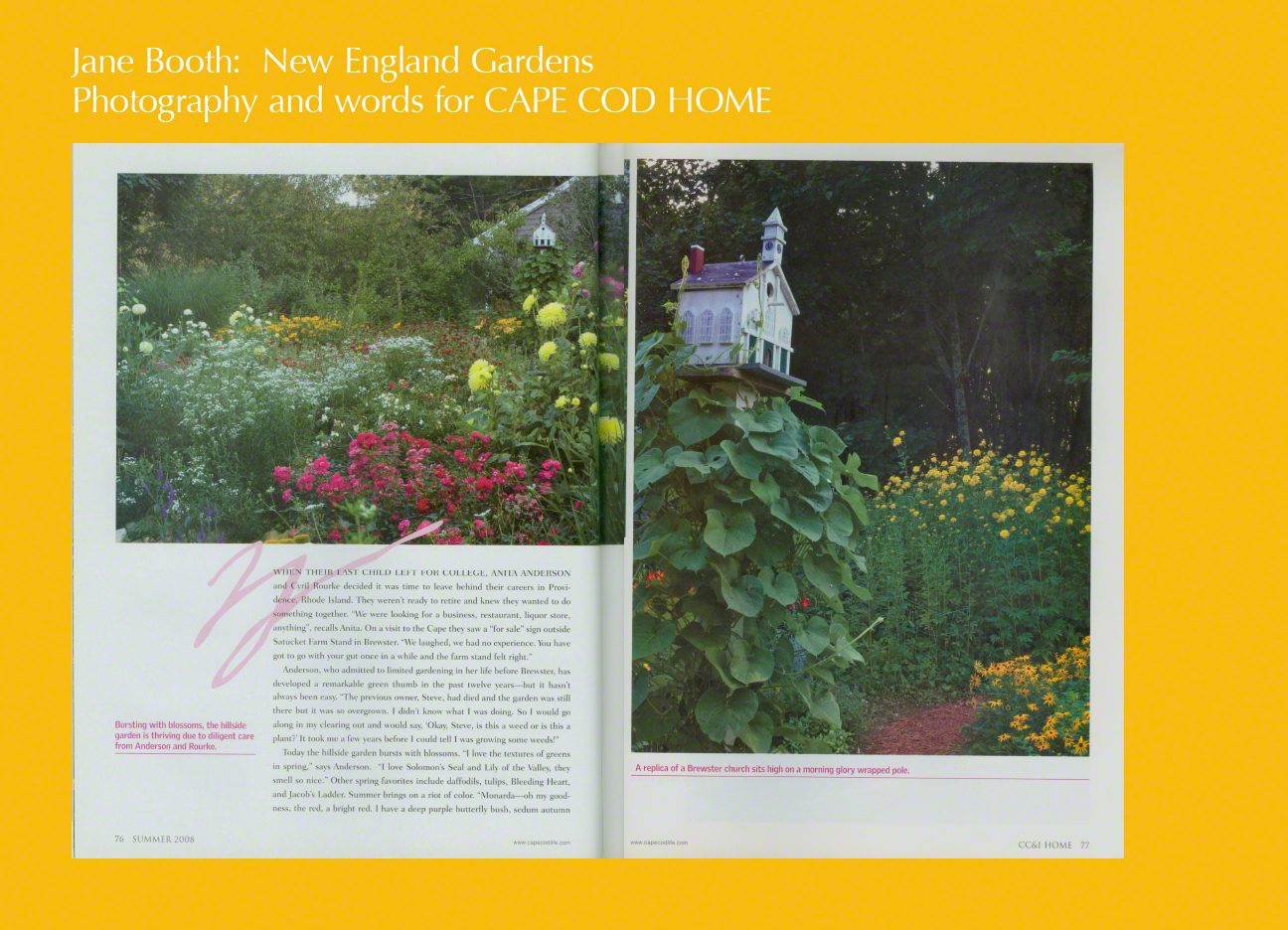
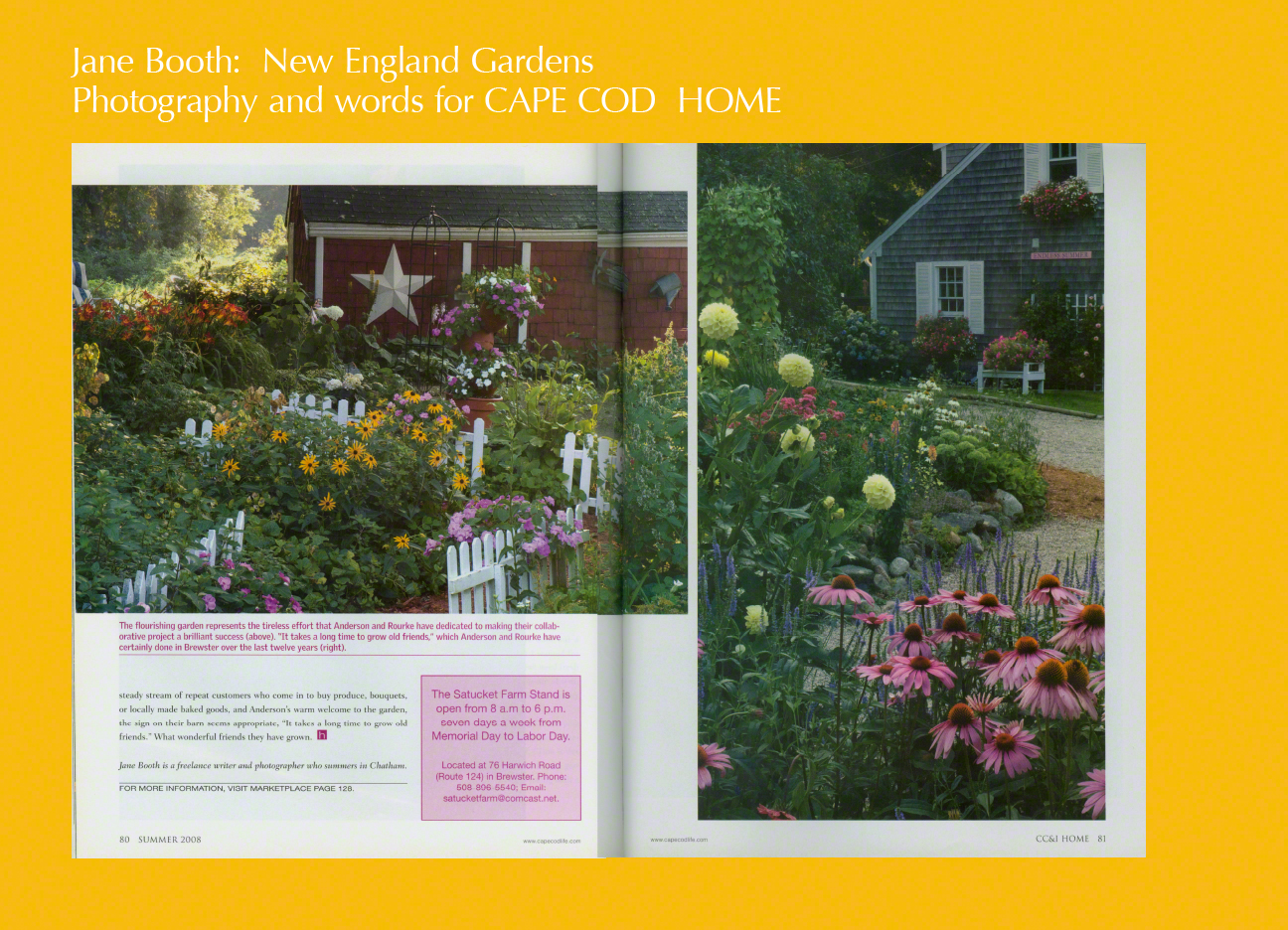
The hillside garden at Satucket Farm Stand in Brewster, Massachusetts bursts with blossoms.  “I love the textures of greens in spring,” says Anita Anderson.   “I love Solomon’s Seal and Lily of the Valley, they smell so nice.”  Other spring favorites include daffodils, tulips, Bleeding Heart, and Jacob’s Ladder.   Summer brings on a riot of color.  “Monarda, oh my goodness, the red, a bright red.  I have a deep purple butterfly bush, sedum autumn joy, tons of veronica, a blue balloon flower, astilbe in white and pink and red.”

The hillside garden at Satucket Farm Stand in Brewster, Massachusetts bursts with blossoms. “I love the textures of greens in spring,” says Anita Anderson. “I love Solomon’s Seal and Lily of the Valley, they smell so nice.” Other spring favorites include daffodils, tulips, Bleeding Heart, and Jacob’s Ladder. Summer brings on a riot of color. “Monarda, oh my goodness, the red, a bright red. I have a deep purple butterfly bush, sedum autumn joy, tons of veronica, a blue balloon flower, astilbe in white and pink and red.”

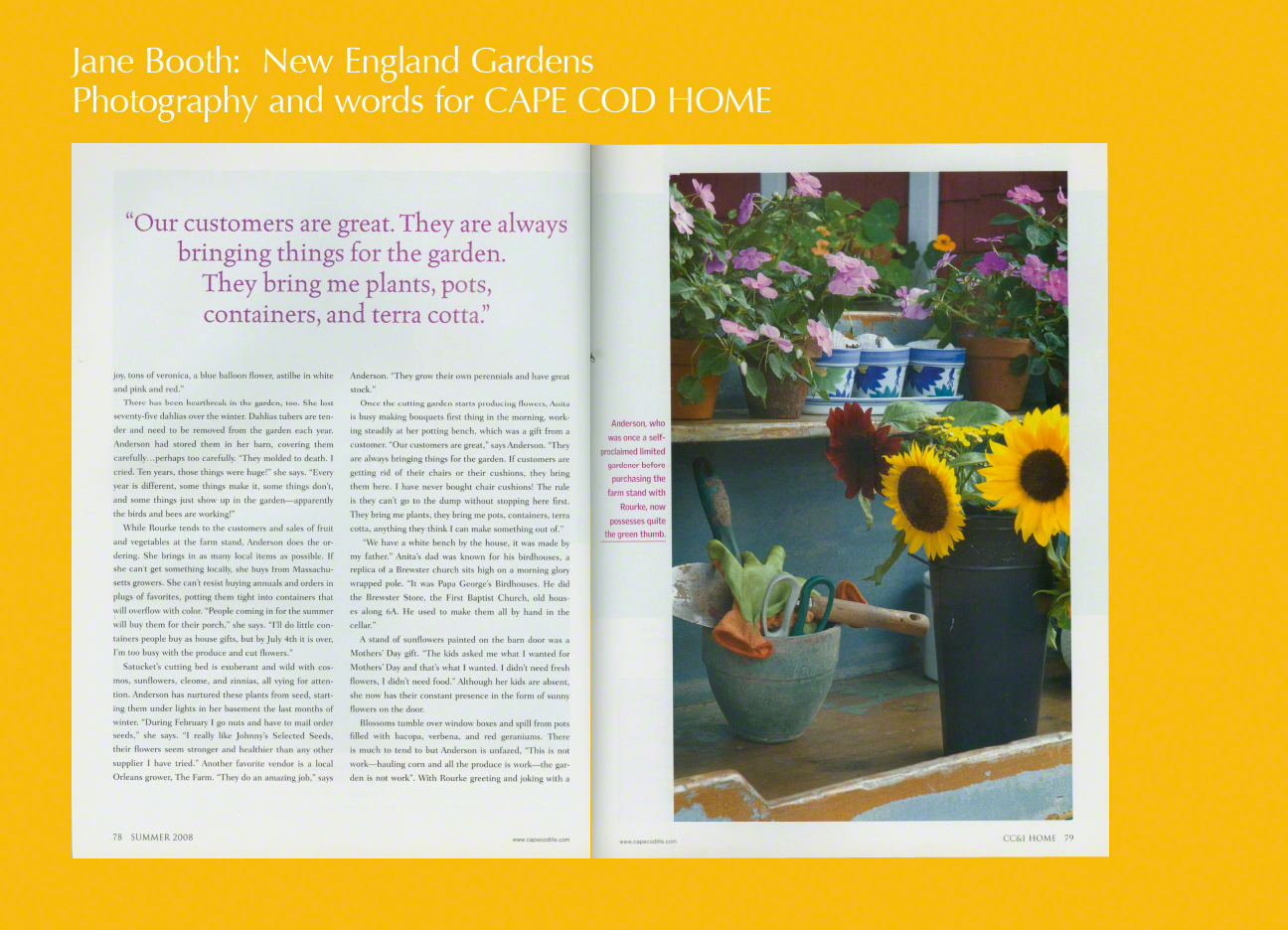
Satucket’s cutting bed  is exuberantly wild with cosmos, sunflowers, cleome, and zinnias all vying for attention.  Anita has nurtured these plants from seed, starting them under lights in her basement the last months of winter.  “During February I go nuts and have to mail order seeds.  I really like Johnny’s Selected Seeds, their flowers seem stronger, healthier than any other supplier I have tried.”

Satucket’s cutting bed is exuberantly wild with cosmos, sunflowers, cleome, and zinnias all vying for attention. Anita has nurtured these plants from seed, starting them under lights in her basement the last months of winter. “During February I go nuts and have to mail order seeds. I really like Johnny’s Selected Seeds, their flowers seem stronger, healthier than any other supplier I have tried.”

Another favorite vendor is a local Orleans grower, The Farm.  “They do an amazing job.  They grow their own perennials and have great stock.”

Another favorite vendor is a local Orleans grower, The Farm. “They do an amazing job. They grow their own perennials and have great stock.”

A stand of sunflowers painted on the barn door was a Mothers’ Day gift.  “The kids asked me what I wanted for Mothers’ Day and that’s what I wanted.  I didn’t need fresh flowers, I didn’t need food.”  Although her kids are absent, she now has their constant presence in the form of sunny flowers on the door.<br /><br /><br /><br />

A stand of sunflowers painted on the barn door was a Mothers’ Day gift. “The kids asked me what I wanted for Mothers’ Day and that’s what I wanted. I didn’t need fresh flowers, I didn’t need food.” Although her kids are absent, she now has their constant presence in the form of sunny flowers on the door.

Golden Earthworm, GARDENS ILLUSTRATED

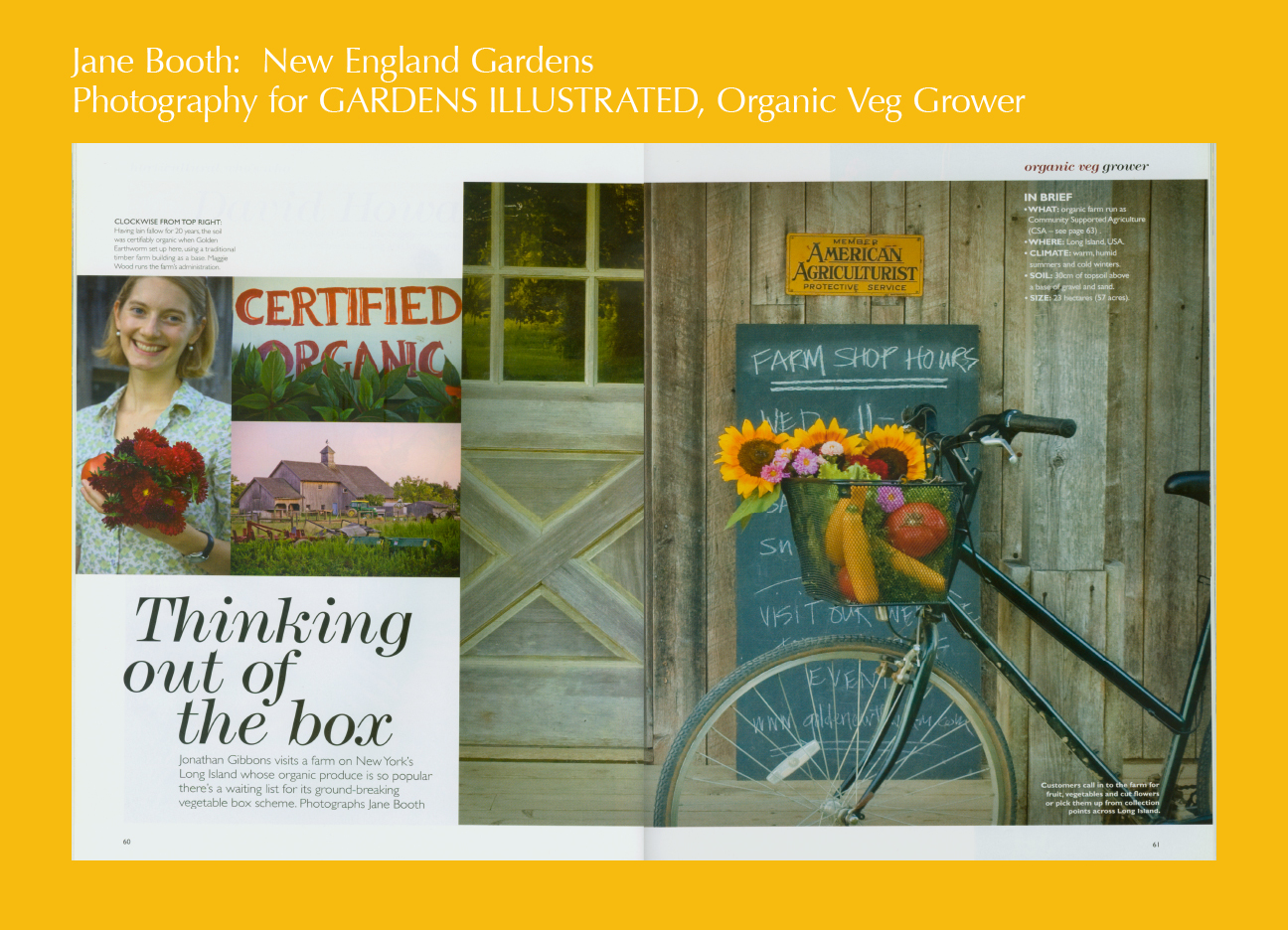
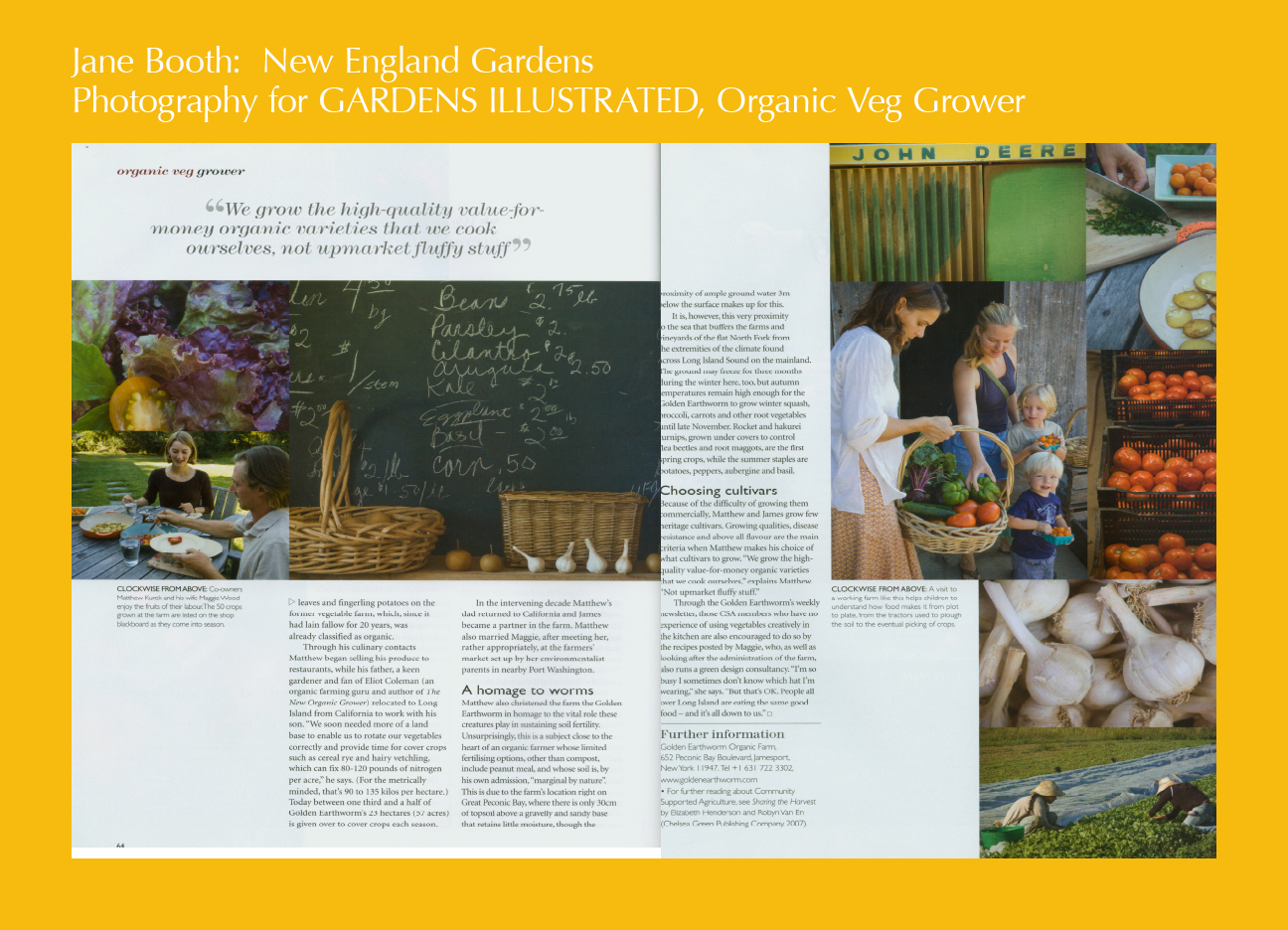
Photographing Golden Earthworm  was a visual delight.  The organic farm, located on the North Fork of Long Island, grows mouthwatering veg and a vibrant display of cutting flowers.

Photographing Golden Earthworm was a visual delight. The organic farm, located on the North Fork of Long Island, grows mouthwatering veg and a vibrant display of cutting flowers.

Maggie Wood, Matthew Kurek, and James Russo were a treat to work with and made sure I had access to all parts of the farm -- from riding out to the fields with an incredibly cheerful, hardworking Mexican family to watching the careful processing and packing of the CSA shares.

Maggie Wood, Matthew Kurek, and James Russo were a treat to work with and made sure I had access to all parts of the farm — from riding out to the fields with an incredibly cheerful, hardworking Mexican family to watching the careful processing and packing of the CSA shares.

Maggie Wood and I put together a lunch of Golden Earthworm's fingerling potatoes roasted in garlic and olive oil and a colorful salad of just picked tomatoes with a sprinkling of fresh picked herbs.

Maggie Wood and I put together a lunch of Golden Earthworm’s fingerling potatoes roasted in garlic and olive oil and a colorful salad of just picked tomatoes with a sprinkling of fresh picked herbs.

http://www.goldenearthworm.com

http://www.gardensillustrated.com

Sharing the Harvest by Elizabeth Henderson and Robyn Van En, Chelsea Green Publishing Company, 2007

A Place in the Shade, CAPE COD HOME

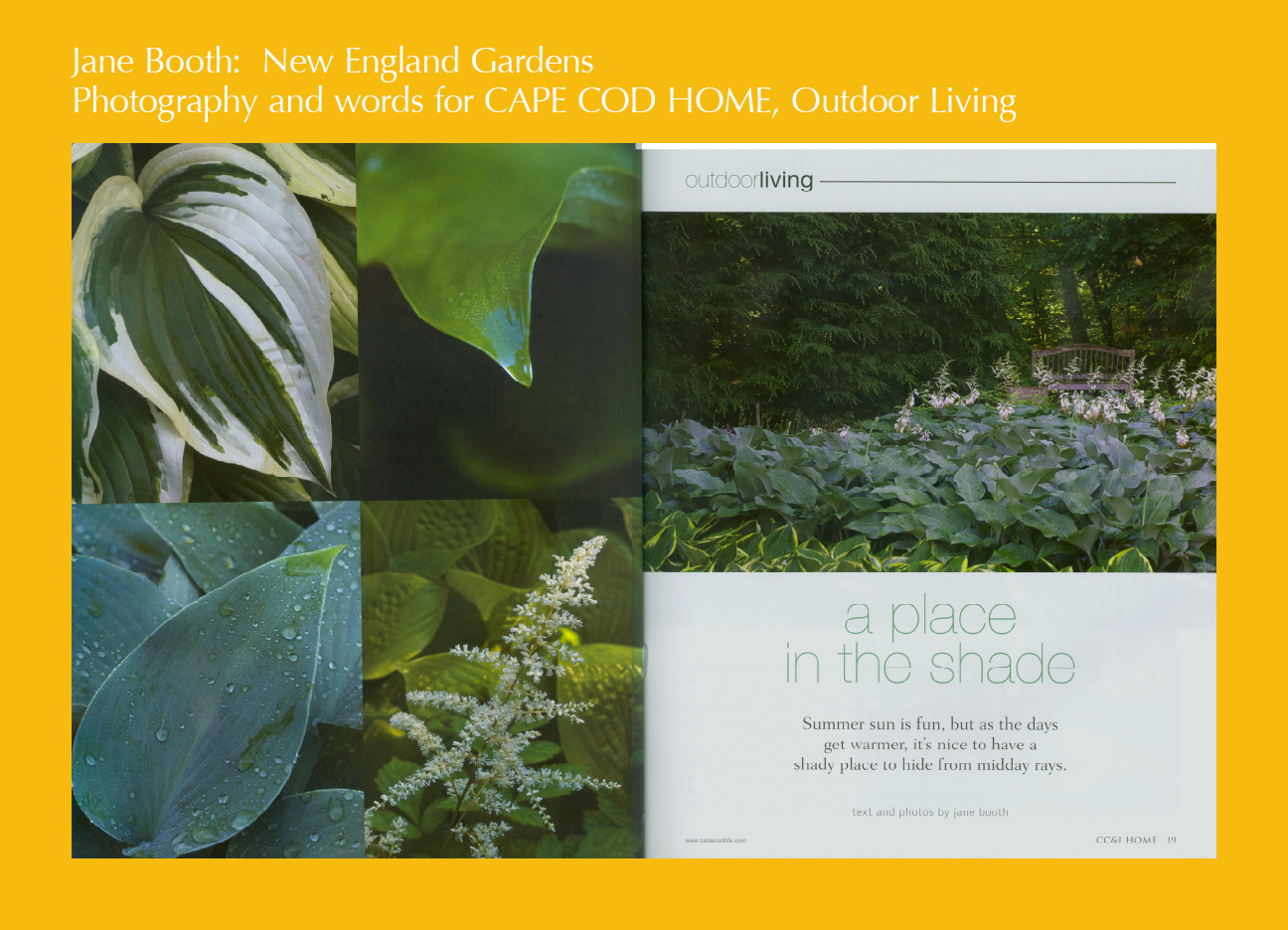
To cover the demise of early spring foliage, plant lots of hostas in all their many foliage shapes, from heart-shaped to cupped and wrinkled.  As the hostas emerge, their leaves will fill bare spaces.

To cover the demise of early spring foliage, plant lots of hostas in all their many foliage shapes, from heart-shaped to cupped and wrinkled. As the hostas emerge, their leaves will fill bare spaces.

There are many varieties of ferns for the shade garden including the delicate maidenhair with black stems supporting finely cut bright green fronds and the Japanese painted fern with burgundy red veins radiating to a pale whitish gray-green.

There are many varieties of ferns for the shade garden including the delicate maidenhair with black stems supporting finely cut bright green fronds and the Japanese painted fern with burgundy red veins radiating to a pale whitish gray-green.

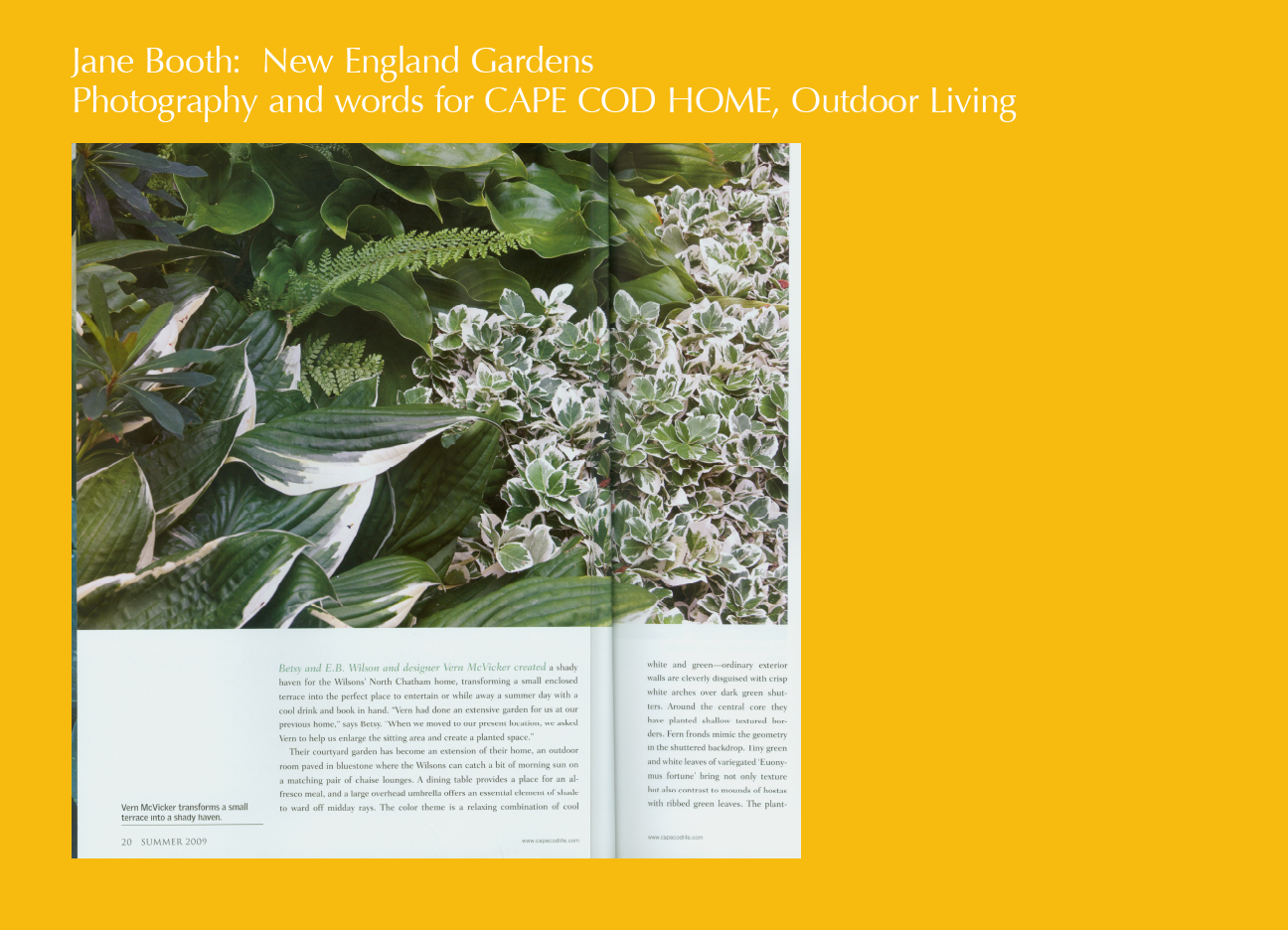
At one end of their courtyard,  white paper birch rises from a base of gray-green hostas, ferns, and euonymus.<br /><br />

At one end of their courtyard, white paper birch rises from a base of gray-green hostas, ferns, and euonymus.
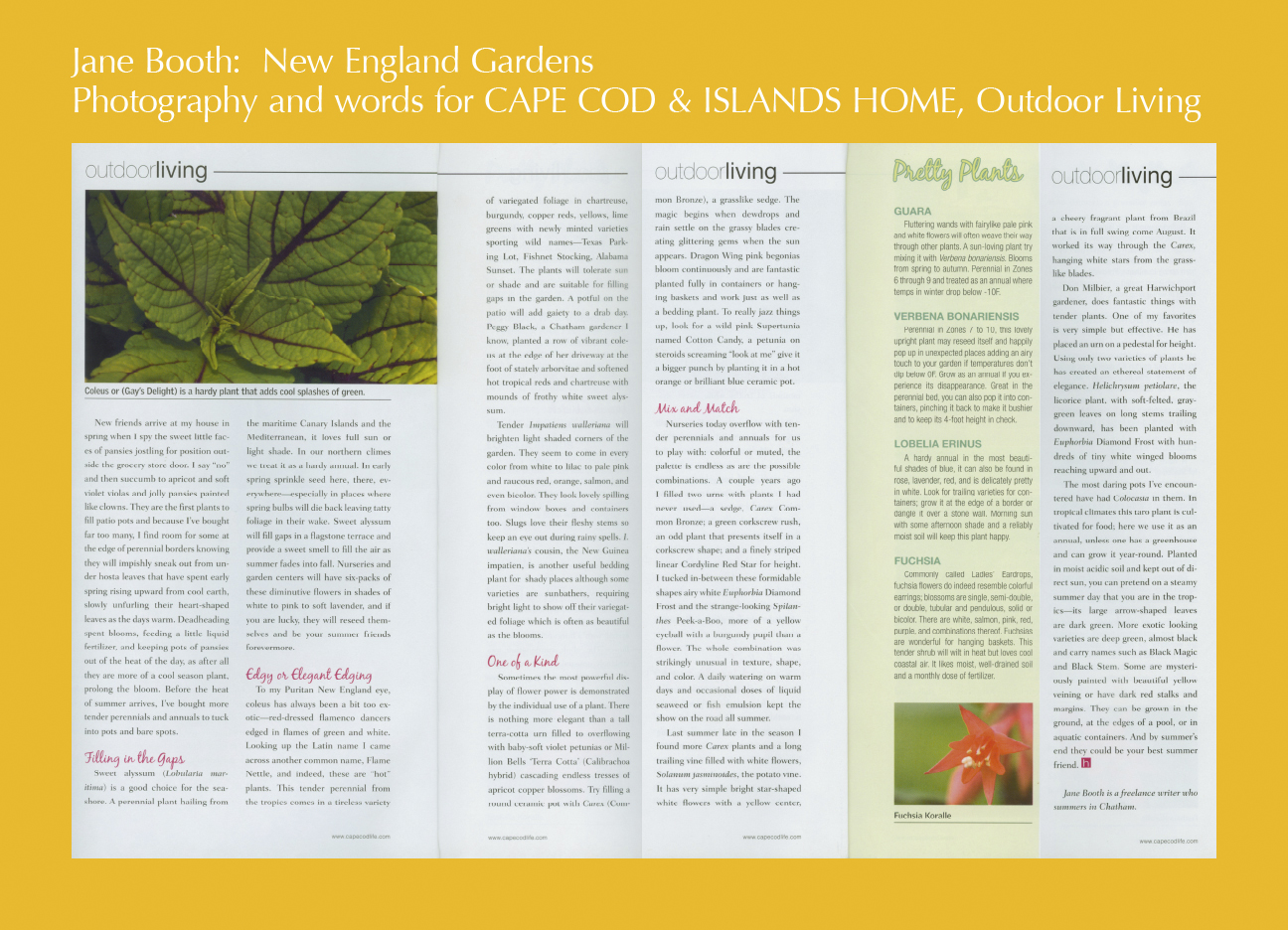
While Betsy and E.B. Wilson work with a peaceful palette, it doesn't mean that all places shady need to be tempered.  Foliage plants for shade can be a cacophony of color.  Coleus are exotic annual clowns with leaves splashed in daring combinations of burgundy and chartreuse.

While Betsy and E.B. Wilson work with a peaceful palette, it doesn’t mean that all places shady need to be tempered. Foliage plants for shade can be a cacophony of color. Coleus are exotic annual clowns with leaves splashed in daring combinations of burgundy and chartreuse.

http://www.capecodlife.com/capecodhome

Garden Accents, CAPE COD HOME

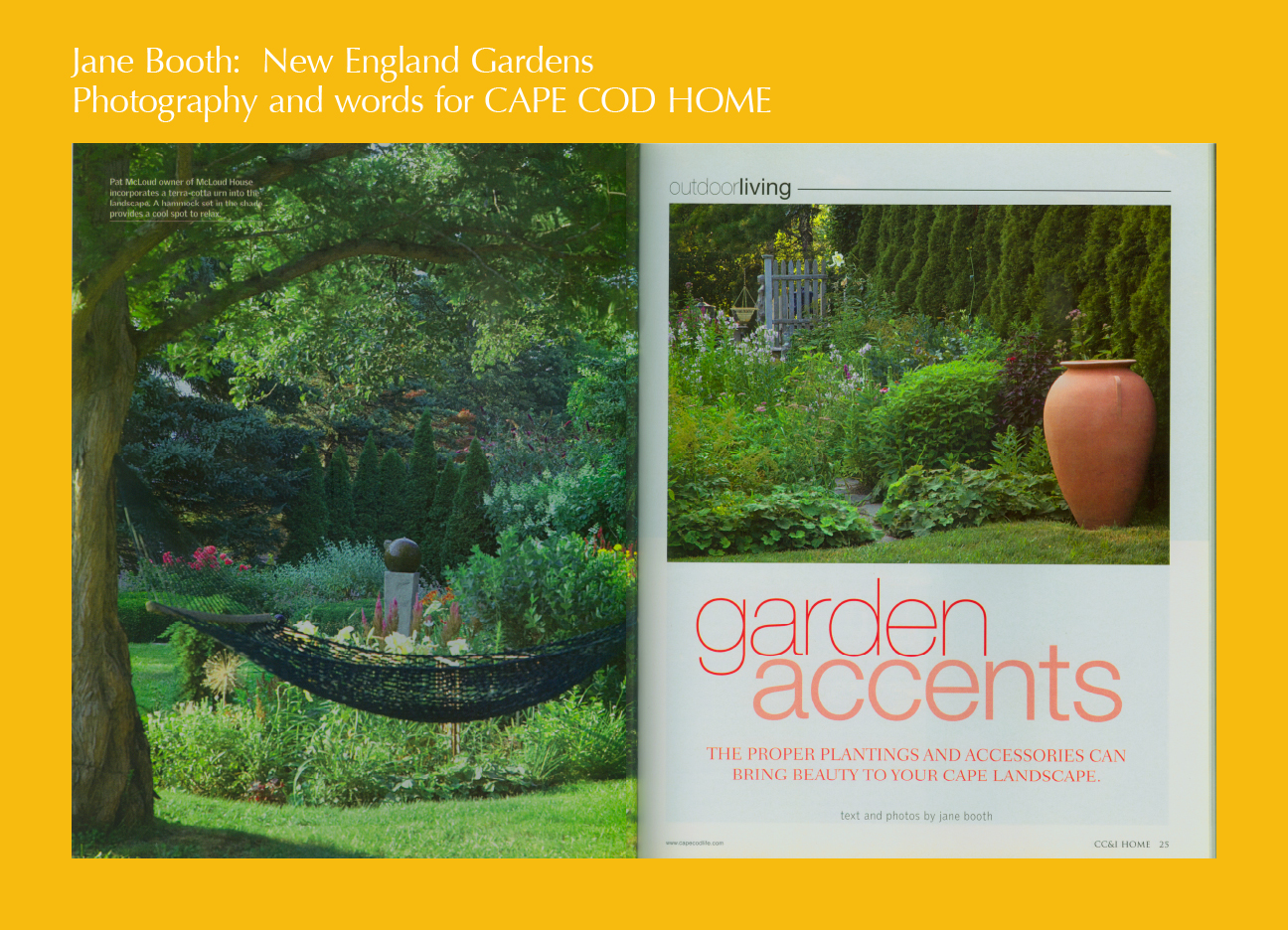
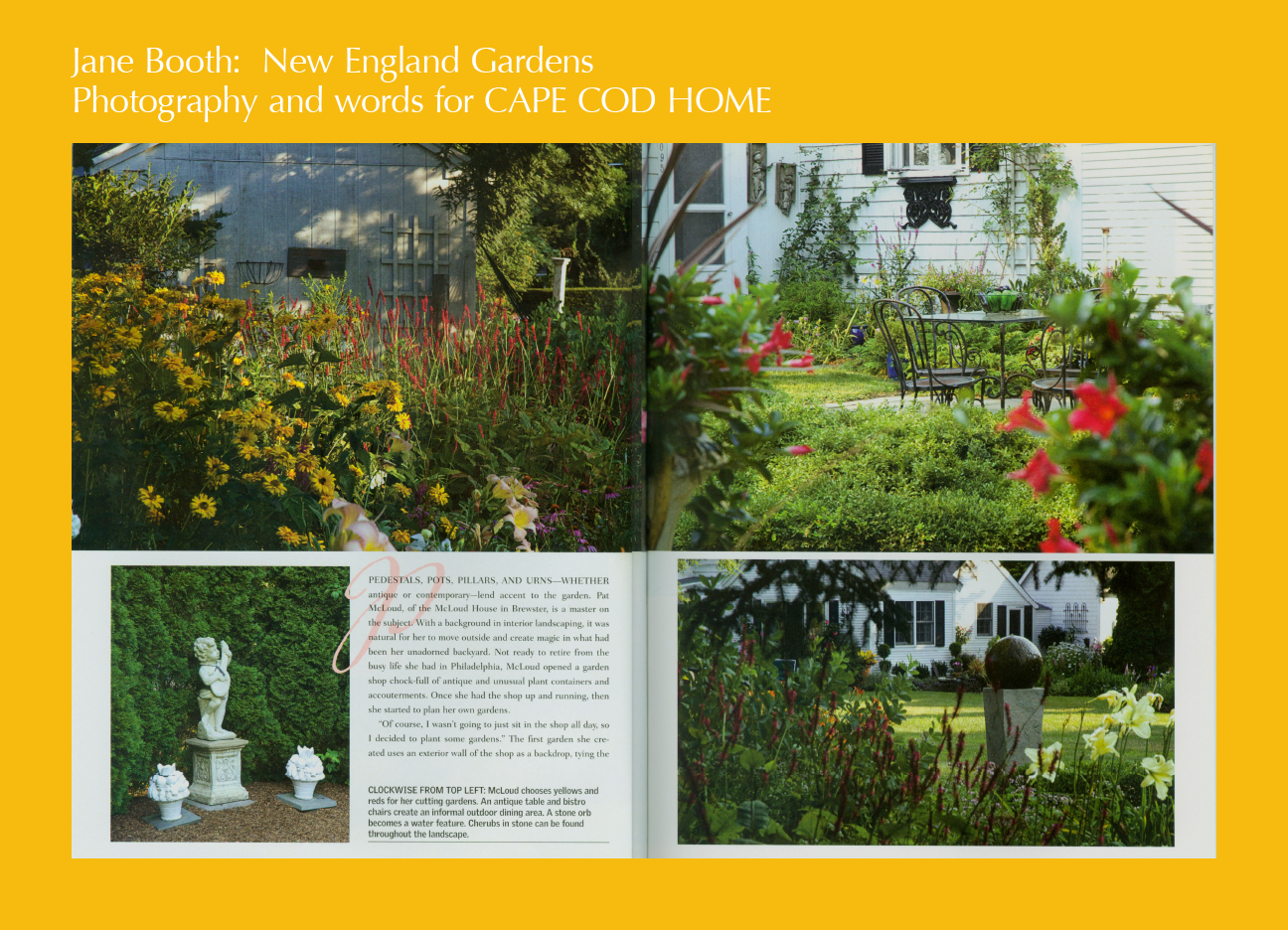
Hanging baskets, garden gates, terra-cotta urns are some of the many accoutrements you will find in Pat McLoud's garden.  A hammock is strung between shade trees for a relaxing nap on a hot day.  Spheres grace pedestals and all around beautiful plantings backed by arborvitae, conical white Hydrangea paniculata blossoms mix with deep purple tubular cones of a butterfly bush.

Hanging baskets, garden gates, terra-cotta urns are some of the many accoutrements you will find in Pat McLoud’s garden. A hammock is strung between shade trees for a relaxing nap on a hot day. Spheres grace pedestals and all around beautiful plantings backed by arborvitae, conical white Hydrangea paniculata blossoms mix with deep purple tubular cones of a butterfly bush.

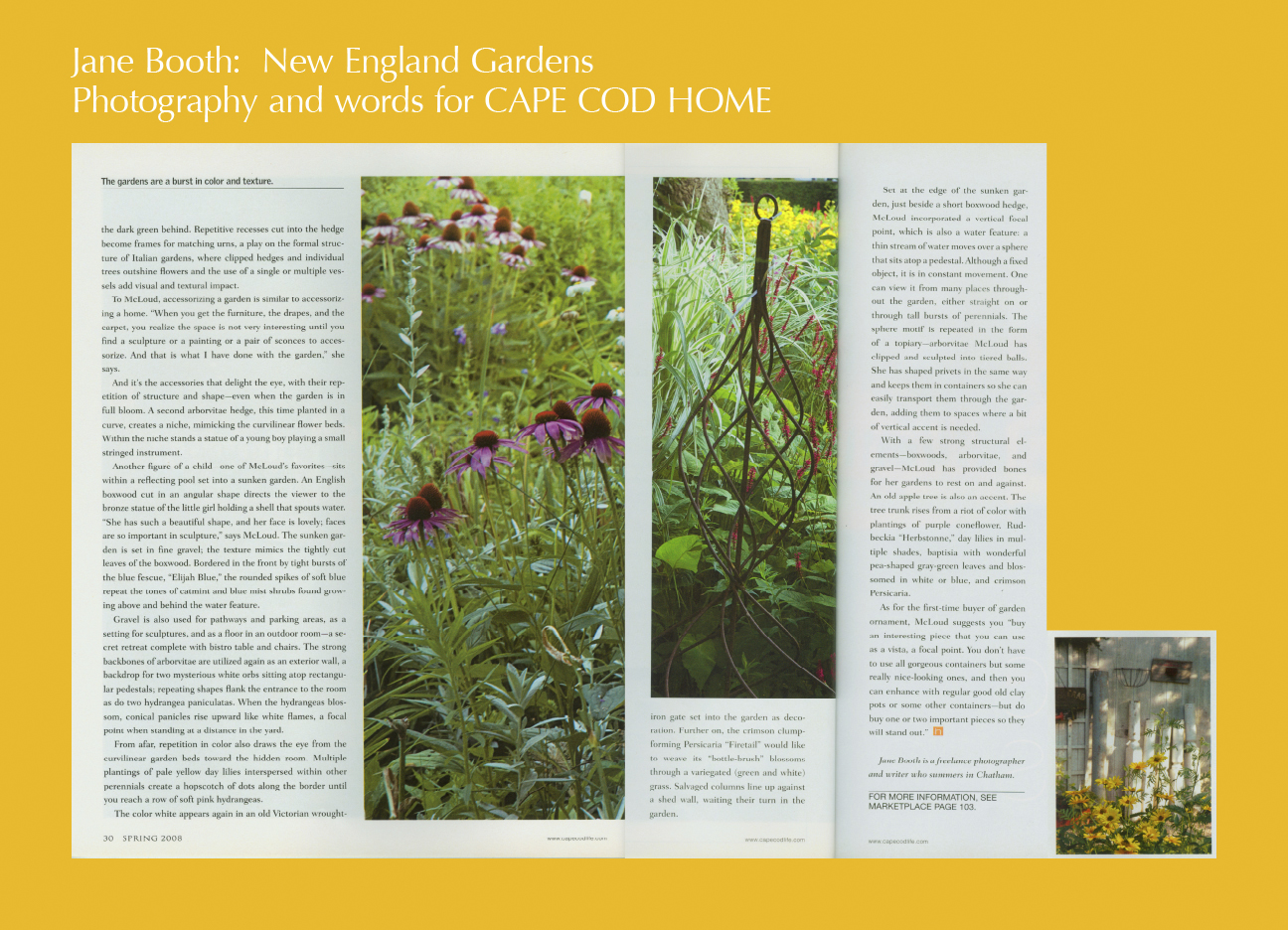
To McLoud, accessorizing a garden is similar to accessorizing a home.  it is accessories which delight the eye, with their repetition of structure and shape - even when the garden is in full bloom

To McLoud, accessorizing a garden is similar to accessorizing a home. it is accessories which delight the eye, with their repetition of structure and shape – even when the garden is in full bloom

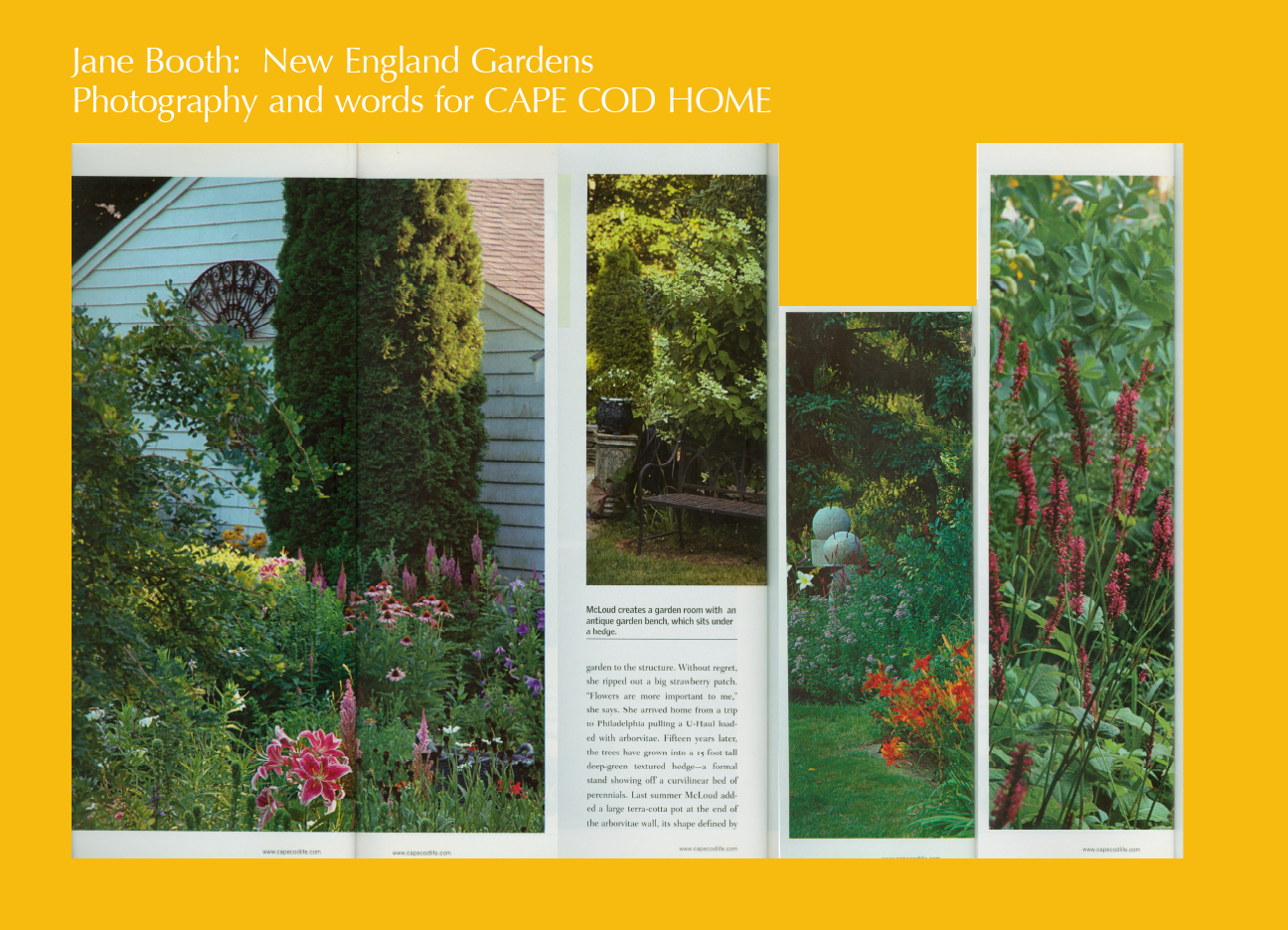
With a few strong structural elements -- boxwood, arborvitae, and gravel -- McLoud has provided bones for her gardens to rest on and against.

With a few strong structural elements — boxwood, arborvitae, and gravel — McLoud has provided bones for her gardens to rest on and against.

CCH McLoud4

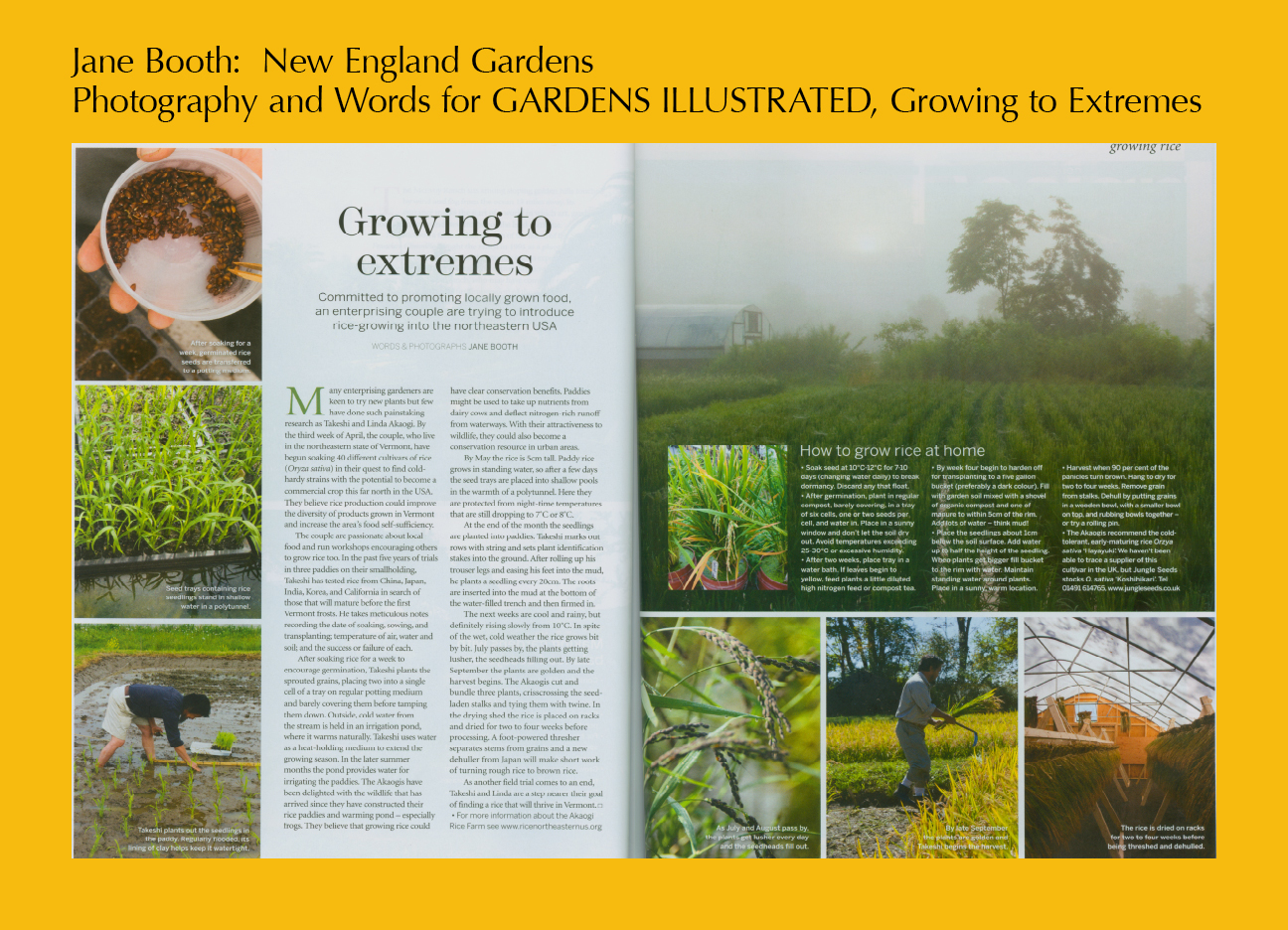
Growing to Extremes, GARDENS ILLUSTRATED

Rice is nice, especially when grown in Vermont's cold climate!   I was thoroughly captivated with every step of the process and was proud when I had a chance to step into the paddy and plant seedlings alongside Takeshi and Linda Akaogi.

Rice is nice, especially when grown in Vermont’s cold climate! I was thoroughly captivated with every step of the process and was proud when I had a chance to step into the paddy and plant seedlings alongside Takeshi and Linda Akaogi.

Quince – A Versatile Fruit

While much of the orchard is planted with apples, one will find—beyond the rows of Baldwin, Orleans Reinette, and D’Arcy Spice—small, graceful quince trees with fuzzy-backed leaves. Quince, which is related to the apple and the pear has similar scent and flavor profile with overtones of guava and maybe  hints of pineapple depending on the variety.

Quince brighten the orchard

When fully ripened, quince may scent a room, and they are a treat to eat, whether poached, roasted, pureed or baked. But they are never ever eaten raw, as they have a hard, gritty, grainy, astringent flesh.

My husband, David Tansey, and I take frequent walks through the orchard, and from bud until harvest, we like to keep an eye on the development of the quince, delighting in the tightly furled, pink buds that untwist into crimson-veined, cup-shaped blossoms.

Tightly furled quince flowers

The flowers of edible quince are a beautiful sight in May 

The immature fruits are covered in a beige-pink, felt-like skin that turns green as the fruits size. By October the quince take on a sunny, golden yellow color, and whether the variety is pear-shaped or flattened and round, they brighten the orchard at midday and lend a glow in the early evening.

Quince (Cydonia oblonga), a native of Persia, have been cultivated for over 4,000 years. Searching for quince lore we read about paintings of Venus depicted holding this fruit of love and happiness in her right hand, and it is quite possible that it was quince and not apple that got Adam’s Eve into trouble.

Quince come in various shapes and sizes

Quince paste, so thick you can cut it with a knife, is a traditional food in the Mediterranean. The Portuguese call it marmelada, the Spanish membrillo, and in Sicily everyone gets into the act when quince are ripe to make cotognata. It is delicious with sharp or creamy cheeses, a treat on morning toast, or as a sweet end to a meal.

Richard “Lionel” Henry holding a bushel box of just picked quince

Below is a recipe for poached quince. But one of the easiest ways to prepare quince is to toss unpeeled, cored chunks of it into the roasting pan alongside freshly harvested carrots, chopped lovage, onion and a leg of lamb. We do the same when roasting a chicken, deglazing the pan with white white, or better yet, Calvados, to make a sublime juice to drizzle over the meat and vegetables. This year we will surely add quince to the preparation of our Christmas goose.

POACHED QUINCE

 2 medium quince

1/4 to 1 cup sugar, or to taste (sugar is needed to alter the astringency)

 Rub quince under running water to remove any fuzz. Cut in quarters or eighths, leaving skin and core intact (they add additional levels of flavor and pectin). Put in pot with water to cover, along with the sugar. Bring to boil then simmer slowly. The quince should be soft after 30 minutes and can be used as is, or add a tad more water if needed and poach them for two more hours; they will turn a pale pink, and if you have patience, simmer them a bit longer to coax them into a beautiful ruby hew. Cool the poached fruit, remove the seeds and core, and add pieces to an apple pie or Tarte Tatin, or serve on ice cream or yogurt. Don’t toss out the syrup, as the resulting elixir is good for the throat.

This story was originally published in one of our favorite magazines on Vermont food and farming, Local Banquet

Please ask Jane Booth for permission to reproduce her copyrighted photographs and/or writing. Email jane.booth.1@gmail.com or call (802) 866-3329.   Jane has spent a good part of her career photographing and writing about gardens and small farms for Gardens Illustrated, Yankee Magazine, Country Living, Country Living Gardens, Better Homes & Gardens, New Old House Journal, and Cape Cod & Islands Home where she produced an ongoing column and feature stories.  

David Tansey is the founder of The Landmark Trust USA and past president of Landmark and The Scott Farm, both located in Dummerston, Vermont.  He was involved in every step of revitalizing The Landmark Trust USA and Scott Farm properties.